


Moz vs Semrush vs Ahrefs: Which SEO Tool is Best for Your Business?
Choosing the right SEO software feels like a monumental decision, and for good reason. The tool you select becomes the command centre for your digital strategy. The debate over Moz vs Semrush vs Ahrefs dominates forums and marketing teams because these three platforms represent the gold standard in the industry, but each serves a slightly different master. They all promise to boost your rankings, but their approaches, data accuracy, and core strengths vary significantly.
- Quick Summary
- The Titans of SEO: An Overview of Moz, Semrush, and Ahrefs
- At a Glance: Key Features Comparison Table
- SEO Tools and Capabilities: A Deep Dive
- The Backlink Battle: Moz vs Semrush vs Ahrefs
- Keyword Research Showdown
- Content Optimisation and Marketing Tools
- User Experience and Interface Design
- Pricing Plans and Value for Money
- Customer Support and Learning Resources
- Pros and Cons: A Final Breakdown
- Frequently Asked Questions (FAQ)
- Which is better, Moz or Semrush?
- Which is better, Ahrefs or Semrush?
- What is Moz and Ahrefs?
- What is the most accurate SEO tool?
- Is Moz good for SEO?
- What is Ahrefs best for?
- What are the disadvantages of Semrush?
- Is Moz reliable?
- Final Verdict: Moz vs Semrush vs Ahrefs – Which Should You Choose?
Whether you're a solo blogger, a growing small business, or a large agency managing multiple clients, picking the wrong tool can mean wasted budget and missed opportunities. This guide cuts through the noise to give you a clear, feature-by-feature breakdown. We'll compare everything from backlink databases and keyword research tools to user interface and overall value to help you decide which platform is the right investment for your specific goals.
Quick Summary
- Ahrefs is best for dedicated SEO professionals and agencies who require the most comprehensive and accurate backlink data on the market. Its strength lies in deep competitor analysis and advanced keyword research.
- Semrush is the ultimate all-in-one marketing suite. It's ideal for marketers and agencies that need a single platform to manage SEO, PPC, content marketing, and social media analytics.
- Moz Pro is perfect for beginners, small businesses, and those prioritising user-friendliness. It offers a solid set of core SEO tools, excellent educational resources, and a more intuitive interface than its competitors.
The Titans of SEO: An Overview of Moz, Semrush, and Ahrefs
Before diving into a side-by-side comparison, it's important to understand the history and philosophy behind each tool. Their origins heavily influence their current strengths and where they excel today.
What is Moz?
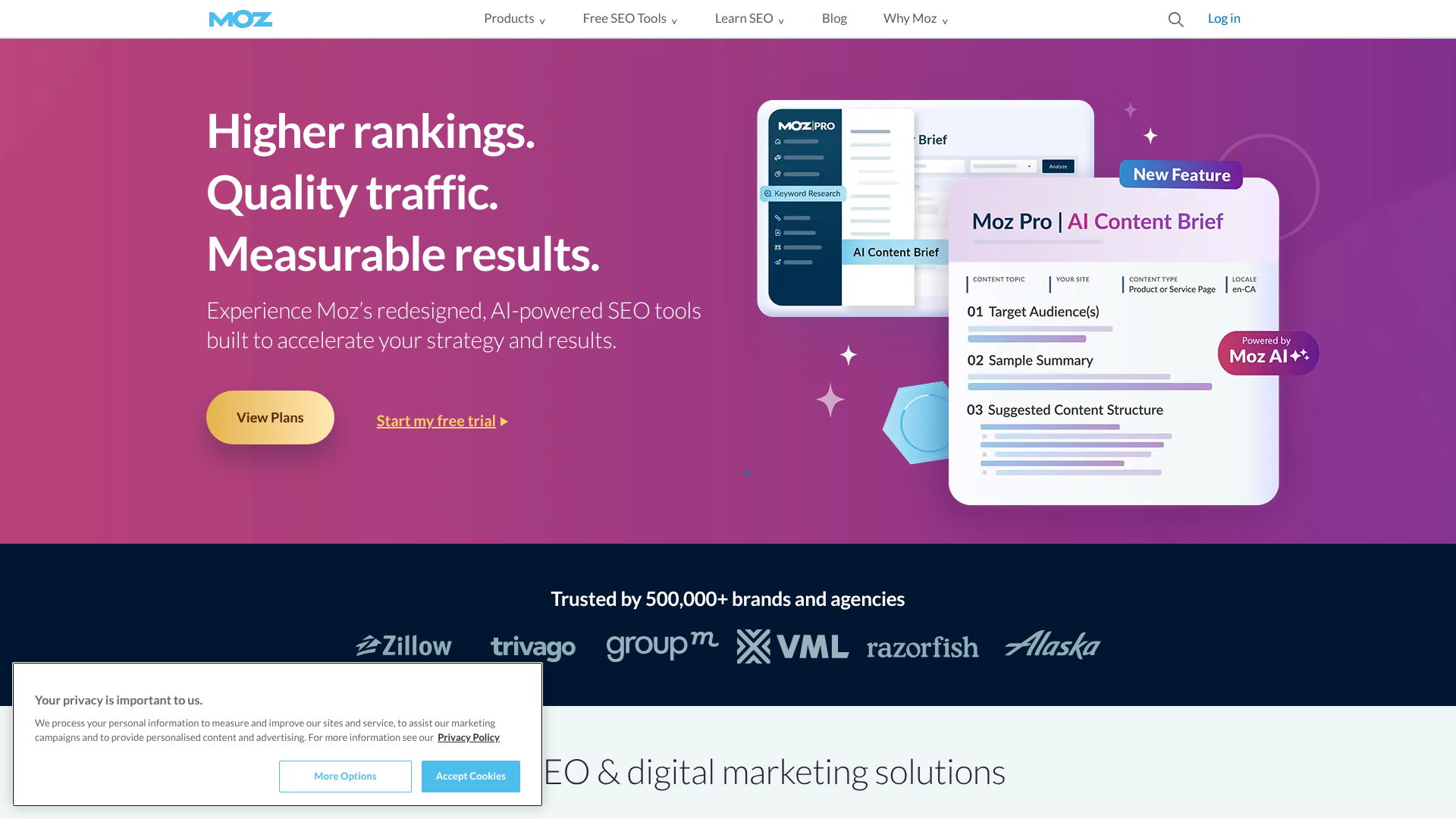
Moz is one of the original players in the SEO world, starting as a blog called SEOmoz in 2004. It's known for popularising SEO and for creating metrics like Domain Authority (DA) and Page Authority (PA), which have become industry-standard benchmarks for estimating a website's ranking potential.
Today, Moz Pro is a comprehensive SEO toolkit designed to be accessible. Its core philosophy revolves around making SEO understandable for everyone, not just technical experts. This is reflected in its clean interface, helpful tooltips, and extensive library of educational content, including the famous Whiteboard Friday series.
What is Semrush?
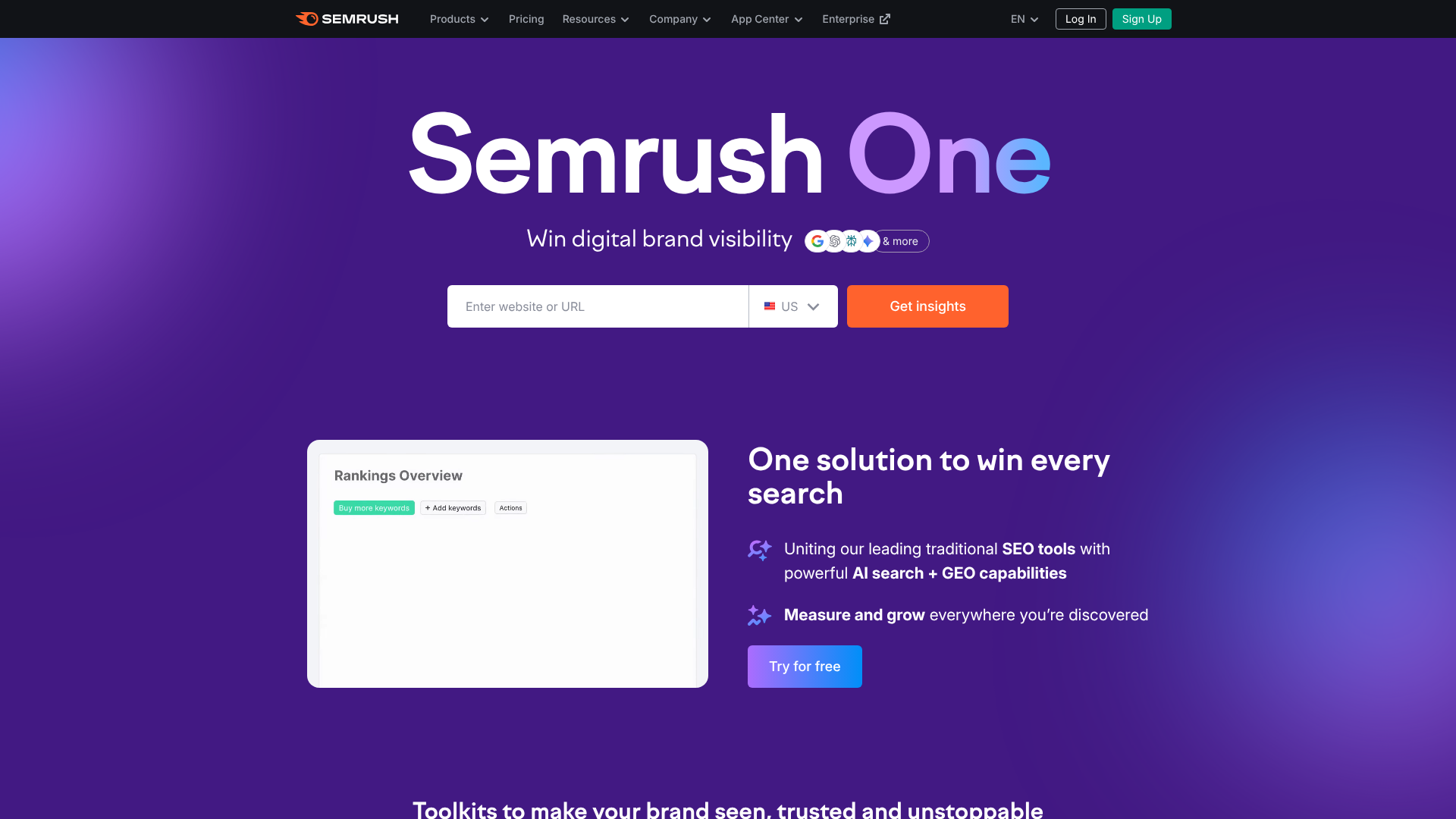
Semrush began in 2008 as a small collection of tools and has since grown into a massive, all-encompassing digital marketing platform. While it has powerful SEO features, its true identity is that of a complete marketing suite. It was one of the first to heavily integrate PPC and advertising data alongside organic search insights.
This makes Semrush a favourite among marketing agencies and in-house teams who manage more than just SEO. With tools for content marketing, social media scheduling, market research, and advertising, it aims to be the only subscription you need to manage your entire online presence.
What is Ahrefs?
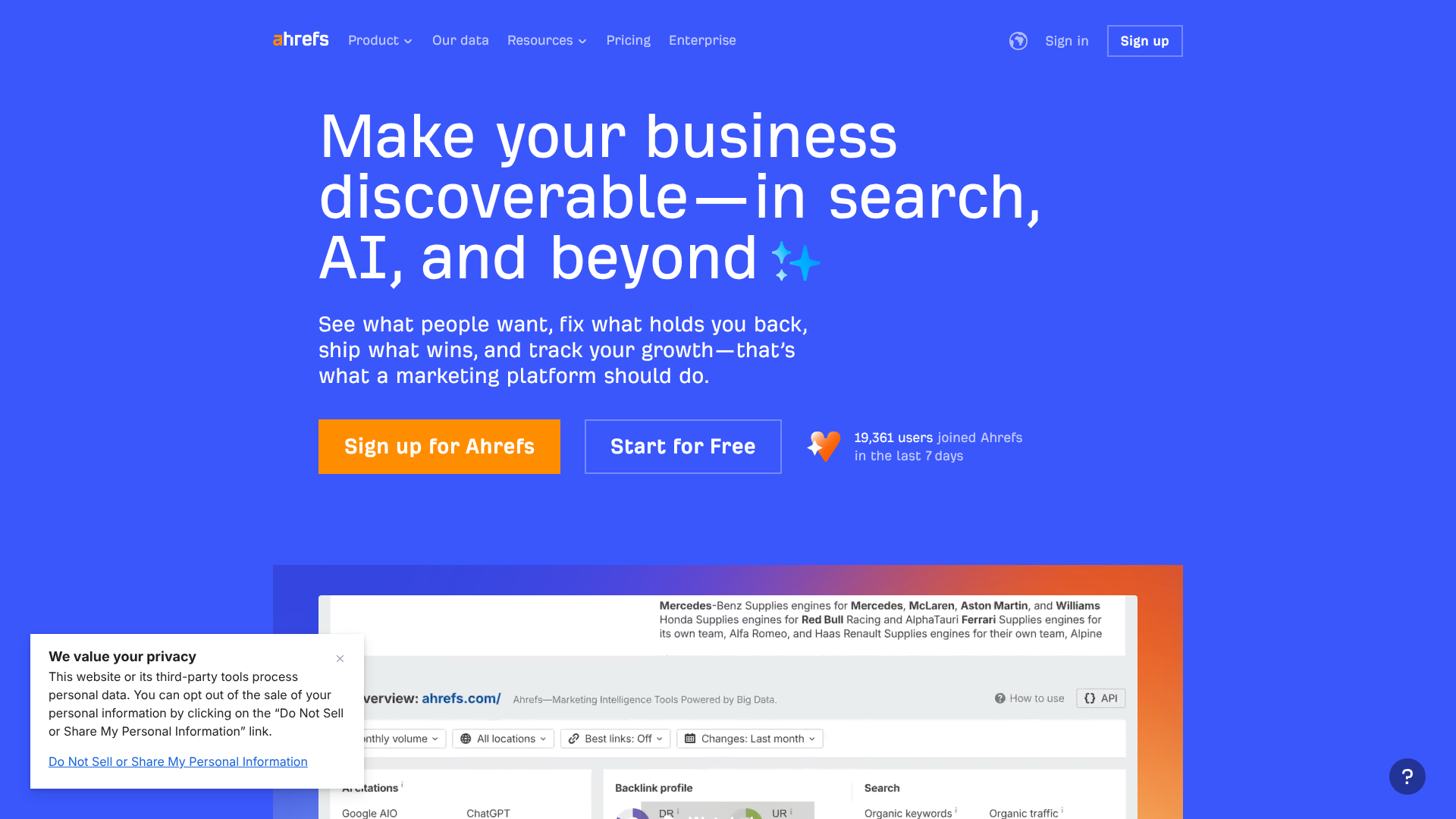
Ahrefs launched in 2011 with a singular focus: to build the best backlink indexer on the planet. Its crawler is famously fast and comprehensive, second only to Google's. This foundation in backlink data remains its core strength, providing users with incredibly detailed insights into competitor link profiles.
Over the years, Ahrefs has expanded into a full SEO suite with powerful tools for keyword research, site audits, and rank tracking. However, its heart is still in its data. The platform is built for SEO practitioners who want to dig deep into the numbers and understand the mechanics behind search rankings, making it a powerhouse for serious SEO work.
At a Glance: Key Features Comparison Table
Here’s a quick overview of how the core features stack up against each other. This table provides a high-level summary before we explore each area in more detail.
| Feature | Ahrefs | Semrush | Moz Pro |
|---|---|---|---|
| Primary Strength | Backlink Analysis & Data | All-in-One Marketing Suite | User-Friendliness & Core SEO |
| Backlink Database | Largest & Fastest | Very Large | Good, but Smaller |
| Keyword Database | Very Large (24.3B keywords) | Largest (25.5B keywords) | Large (500M keywords) |
| Site Audit Tool | Excellent, very technical | Excellent, comprehensive | Very Good, easy to understand |
| Rank Tracker | Daily Updates, very accurate | Daily Updates, feature-rich | Daily/Weekly Updates |
| Content Marketing Tools | Content Explorer, Keywords Explorer | Full Content Marketing Platform | On-Page Grader, Content Suggestions |
| PPC/Advertising Tools | Basic PPC keyword data | Extensive, market-leading | Limited |
| User Interface | Data-focused, clean | Feature-rich, can be complex | Intuitive, beginner-friendly |
| Unique Metric | Domain Rating (DR) | Authority Score | Domain Authority (DA) |

SEO Tools and Capabilities: A Deep Dive

Beyond the summary, the real differences emerge when you analyse the quality and depth of the individual tools. How each platform handles core SEO tasks can have a big impact on your workflow and results.
Rank Tracking Accuracy and Updates
Keeping an eye on your keyword rankings is fundamental. All three tools do this well, but with different levels of detail and frequency.
Semrush offers one of the most robust rank trackers, providing daily updates and a wealth of features. You can track keywords across different devices and locations, monitor SERP feature volatility, and even see your share of voice compared to competitors. Its accuracy is widely respected in the industry.
Ahrefs also provides daily updates and is known for its precision. Its rank tracker is clean and effective, showing you SERP feature ownership, ranking progress over time, and competitor comparisons. It does exactly what you need it to do without unnecessary complexity.
Moz Pro's rank tracking is reliable but slightly less advanced than its competitors. Depending on your plan, updates may be weekly rather than daily. While it provides all the essential data, power users might miss the granular detail and daily frequency offered by the other two.
Site Auditing and Technical SEO
A healthy website is the foundation of good SEO. A site audit tool crawls your site to find technical issues like broken links, slow pages, and incorrect meta tags.
Semrush's Site Audit tool is incredibly comprehensive. It checks for over 140 different technical and on-page SEO issues, presenting them in a prioritised list that's easy to understand. It also integrates with Google Analytics and offers thematic reports that help you focus on specific problem areas.
Ahrefs' Site Audit is equally powerful and favoured by technical SEOs for its speed and data visualisation. It provides detailed explanations for every issue it finds and allows you to create custom filters to zero in on specific problems. Its ability to crawl JavaScript-heavy websites is also a significant advantage.
Moz Pro's Site Crawler is effective and user-friendly. It organises issues by category and impact, making it easy for non-technical users to identify and fix the most critical problems first. While it may not have the sheer number of checks as Semrush, it excels at making technical SEO accessible.
Pro Tip: When running your first site audit, focus on the 'Critical' errors first. These are often issues like 404 errors or indexing problems that can have an immediate and significant negative impact on your rankings. Fixing these provides the quickest wins.
The Backlink Battle: Moz vs Semrush vs Ahrefs
Backlink analysis is where the differences between these tools become most apparent. A tool's ability to find and analyse backlinks is directly tied to the size, speed, and freshness of its data index.
This is Ahrefs' home turf. It boasts the largest live backlink index and the fastest crawler in the industry. This means it finds new and lost backlinks faster than anyone else, giving you the most up-to-date view of your own and your competitors' link profiles. Its Site Explorer tool provides an unparalleled level of detail, allowing you to filter and sort link data in countless ways.
Semrush has invested heavily in its backlink infrastructure and now has a massive index that rivals Ahrefs. Its Backlink Analytics tool is powerful, offering deep insights and a useful Authority Score to gauge the quality of linking domains. The main difference is often the speed at which new links are discovered, where Ahrefs typically has a slight edge.
Moz's Link Explorer is powered by its own respected index, but it is smaller than both Ahrefs' and Semrush's. While it provides all the essential data and its proprietary Domain Authority metric is invaluable, you may find it misses some of the newer or more obscure links that the other two platforms pick up. For most users, its data is more than sufficient, but for highly competitive niches, the extra data from Ahrefs or Semrush can be a deciding factor.
Keyword Research Showdown
Finding the right keywords to target is the cornerstone of any SEO campaign. All three platforms offer powerful tools, but they excel in different areas.
Semrush's Keyword Magic Tool is a fan favourite. It draws from a database of over 25.5 billion keywords and makes it easy to find long-tail variations, questions, and related terms. Its filtering capabilities are top-notch, allowing you to narrow down massive lists to find the perfect opportunities.
Ahrefs' Keywords Explorer is a close competitor, known for its accurate keyword difficulty score and excellent SERP overview data. A unique feature is its ability to show 'clicks' data, which tells you how many people actually click on a search result. This is crucial, as many searches are now answered directly on the SERP, resulting in zero clicks.
Moz's Keyword Explorer is incredibly intuitive. It provides a unique 'Priority' score that balances search volume, difficulty, and organic click-through rate to help you identify the best keywords to target. While its database is smaller, it excels at simplifying the keyword research process for users who might be overwhelmed by the sheer volume of data in the other tools.
Content Optimisation and Marketing Tools
Creating content that ranks requires more than just placing keywords. Modern SEO tools offer features to help you write and optimise content based on what's already performing well.
This is a major strength for Semrush. Its Content Marketing Platform is a suite of tools that includes a topic research generator, an SEO content template, and the SEO Writing Assistant. This assistant acts like a real-time coach, grading your content's readability, SEO, tone of voice, and originality as you write.
Ahrefs' primary content tool is the Content Explorer. It's a searchable database of billions of web pages that lets you find the most popular content on any topic. You can analyse top-performing articles to understand what makes them successful, identify content gaps, and find low-competition topics.
Moz focuses more on on-page optimisation. Its On-Page Grader analyses a page against a target keyword and provides a checklist of improvements. It also offers content suggestions within its Keyword Explorer, but it doesn't have a dedicated content creation assistant like Semrush.
User Experience and Interface Design
The most powerful tool is useless if you can't figure out how to use it. The user interface (UI) and overall user experience (UX) are critical factors, especially for those new to SEO.
Moz Pro consistently wins awards for its user-friendliness. The interface is clean, uncluttered, and full of helpful explanations. It guides users through complex data, making it the least intimidating option for beginners or business owners who are wearing many hats.
Semrush is a powerhouse, and its interface reflects that. It's packed with hundreds of tools and reports, which can be overwhelming at first. While it's logically organised, there is a definite learning curve to mastering the platform and finding everything it has to offer.
Ahrefs strikes a balance between data density and clean design. The UI is modern and fast, but it's built for people who are comfortable with data. It presents a lot of numbers and charts without much hand-holding, assuming the user knows what they're looking at. It's highly efficient for professionals but can be daunting for newcomers.
Pricing Plans and Value for Money
For most businesses, cost is a major consideration. All three platforms are premium tools with subscription-based pricing, but their plans and limitations differ.
Pricing information is subject to change. Please visit the official websites for the most current details.
- Moz Pro: Typically offers the most affordable entry-level plan, making it a great starting point for small businesses and freelancers. Its plans are generally based on the number of campaigns (websites), keywords tracked, and pages crawled.
- Semrush: Its pricing reflects its all-in-one nature. The entry-level 'Pro' plan is comparable to the others, but costs can increase as you move to 'Guru' and 'Business' tiers, which unlock more advanced features like the Content Marketing Platform and historical data.
- Ahrefs: Recently shifted its pricing model to be usage-based. While there are standard tiers (Lite, Standard, Advanced, Enterprise), your monthly cost is also affected by how many reports you run. This can make it more expensive for power users and agencies, but potentially more flexible for others. You can explore their options on the Ahrefs website.
When evaluating value, consider what you'll actually use. If you only need core SEO tools, Moz might offer the best value. If you need PPC and content tools, Semrush's bundled price could save you money compared to subscribing to multiple separate services. If you need the absolute best backlink data, the premium price for Ahrefs may be a worthwhile investment.
Pro Tip: Before committing to an annual plan, take advantage of free trials or shorter monthly subscriptions. Use this time to connect your own website and see which tool's data and workflow you prefer for your specific projects.
Customer Support and Learning Resources
When you're stuck, good support and clear documentation are essential. All three companies invest heavily in educating their users.
Moz has built its brand on education. The Moz Blog and Whiteboard Friday videos are legendary resources for learning SEO. Their customer support is known for being friendly and helpful, and their active community forum is a great place to get advice from other users.
Ahrefs also produces some of the best educational content in the industry. Their blog features highly detailed, data-driven case studies, and their YouTube channel offers practical tutorials. Their support is primarily through live chat and is known for being fast and staffed by knowledgeable product specialists.
Semrush offers extensive support through its Semrush Academy, which provides free courses and certifications on digital marketing. They offer phone, chat, and email support, making it easy to get help. Given the complexity of their platform, these resources are invaluable for new users.
Pros and Cons: A Final Breakdown
To simplify your decision, here is a summary of the main advantages and disadvantages of each platform.
Ahrefs
Pros:
- Industry-leading backlink index (largest and freshest data).
- Excellent keyword research tool with unique 'clicks' data.
- Fast, powerful, and highly detailed site audit tool.
- Clean, data-focused user interface for professionals.
Cons:
- Usage-based pricing can become expensive for heavy users.
- Steeper learning curve for beginners.
- Less comprehensive features for PPC and social media.
Semrush
Pros:
- True all-in-one marketing platform (SEO, PPC, content, social).
- Best-in-class content marketing and optimisation tools.
- Massive keyword and backlink databases.
- Extensive competitor analysis tools for advertising.
Cons:
- The sheer number of features can be overwhelming.
- Can be one of the more expensive options, especially at higher tiers.
- Some users report occasional inaccuracies in traffic estimates.
Moz Pro
Pros:
- Extremely user-friendly and intuitive interface, perfect for beginners.
- Strong core SEO tools for keyword research, link building, and site audits.
- Excellent educational resources and community support.
- Generally the most affordable entry point of the three.
Cons:
- Smaller backlink and keyword databases compared to competitors.
- Rank tracking updates can be less frequent on lower plans.
- Lacks the advanced features and depth of Ahrefs or Semrush.
Frequently Asked Questions (FAQ)
Which is better, Moz or Semrush?
Semrush is generally better if you need an all-in-one marketing tool that covers SEO, PPC, content, and social media. It has larger data indexes and more advanced features. Moz is better for beginners or small businesses who want a user-friendly, SEO-focused tool with a gentler learning curve and a more affordable starting price.
Which is better, Ahrefs or Semrush?
This is a classic debate. Ahrefs is typically considered better for pure SEO tasks, especially backlink analysis and in-depth keyword research, due to the quality and freshness of its data. Semrush is better for those who need a broader marketing toolkit that integrates SEO with advertising, content creation, and social media management. The choice often comes down to whether you are an SEO specialist (Ahrefs) or a general digital marketer (Semrush).
What is Moz and Ahrefs?
Moz and Ahrefs are both leading software-as-a-service (SaaS) companies that provide comprehensive toolkits for search engine optimisation. Moz is known for its user-friendly interface and educational resources, making it great for beginners. Ahrefs is renowned for its powerful backlink crawler and deep data analysis tools, making it a favourite among experienced SEO professionals.
What is the most accurate SEO tool?
Accuracy can be subjective and depends on the metric. For backlink data, Ahrefs is widely considered the most accurate and comprehensive due to its superior web crawler. For keyword search volume, all top tools use different data sources and algorithms, leading to variations. No tool is 100% accurate, as only Google has the true data, but Ahrefs and Semrush are generally regarded as the top contenders for overall data reliability.
Is Moz good for SEO?
Yes, Moz is very good for SEO, especially for those new to the field or for businesses that need to manage core SEO tasks effectively. It provides reliable tools for rank tracking, site audits, keyword research, and link building. While its database may not be as vast as its competitors, its proprietary metrics like Domain Authority are industry standards, and its user-friendly approach makes complex SEO tasks manageable.
What is Ahrefs best for?
Ahrefs is best for backlink analysis and competitor research. Its core strength is its massive and constantly updated index of live backlinks, which allows users to get the most accurate picture of any website's link profile. It also excels at keyword research, offering unique data points like click metrics that help users choose more effective keywords.
What are the disadvantages of Semrush?
The main disadvantages of Semrush are its complexity and cost. The platform is so feature-rich that it can be overwhelming for new users, leading to a steep learning curve. Additionally, to access its full suite of tools, particularly the advanced content marketing and reporting features, you need to subscribe to higher-priced tiers, which can be expensive for small businesses or freelancers.
Is Moz reliable?
Yes, Moz is a very reliable and reputable tool in the SEO industry. It has been around for nearly two decades and has established trusted metrics like Domain Authority. Its data for rank tracking, site audits, and keyword suggestions is dependable for making strategic SEO decisions. While its data indexes are smaller than Ahrefs and Semrush, the information it provides is consistent and accurate.
Final Verdict: Moz vs Semrush vs Ahrefs – Which Should You Choose?
After comparing features, data, and usability, there is no single 'best' tool for everyone. The right choice in the Moz vs Semrush vs Ahrefs debate depends entirely on your budget, your role, and your primary objectives.
You should choose Ahrefs if:
- You are a dedicated SEO professional, consultant, or agency.
- Your primary need is the most accurate and comprehensive backlink data available.
- You are comfortable with a data-heavy interface and want to perform deep competitor analysis.
You should choose Semrush if:
- You are a digital marketing manager or an agency that handles more than just SEO.
- You need an integrated toolkit for SEO, PPC, content marketing, and social media.
- You value having a vast range of features and reports in one single platform.
You should choose Moz Pro if:
- You are a small business owner, a blogger, or new to SEO.
- You prioritise a user-friendly interface and clear, actionable insights.
- You need a solid, reliable set of core SEO tools without an overwhelming number of features and at a more accessible price point.
Ultimately, all three are excellent platforms that can deliver fantastic results. By aligning your specific needs with the core strengths of each tool, you can make a confident decision that will empower your digital marketing efforts for years to come.