
Competitor Analysis with Semrush: A Marketer's Step-by-Step Guide for 2026
Understanding your competition is fundamental to building a successful digital strategy. Without knowing what your rivals are doing, you're essentially navigating the market blindfolded. Conducting a thorough competitor analysis with Semrush provides the data-driven clarity needed to identify opportunities, mitigate threats, and ultimately outperform others in your niche. This platform offers a powerful suite of tools designed specifically to dissect every aspect of a competitor's online presence, from their most profitable keywords to their most authoritative backlinks.
- What You'll Learn
- What is Competitor Analysis in SEO (And Why It Matters)
- An Overview of Semrush's Competitor Analysis Toolkit
- Step 1: How to Identify Your True Competitors Using Semrush
- Step 2: Analysing Competitor Keywords with a Semrush Analysis
- Step 3: Evaluating Competitor Backlink Profiles
- Step 4: Using Semrush for Competitor Traffic Analysis
- Beyond SEO: Social Media Competitor Analysis with Semrush
- Expanding Your View: Market Research with Semrush Data
- Real-World Impact: Success Stories Using Semrush for Competitor Insights
- Best Practices for Actioning Your Competitor Analysis Insights
- Frequently Asked Questions (FAQ)
- Does Semrush do competitor analysis?
- What is a competitor analysis in SEO?
- Which tool is best for competitor analysis?
- Can ChatGPT do a competitor analysis?
- Final Thoughts: Gaining Your Competitive Edge
This guide will walk you through a step-by-step process for using Semrush to gain a decisive competitive advantage. We'll move beyond simply looking at rankings and delve into the strategic insights that allow you to make smarter marketing decisions. Whether you're a small business owner, an in-house marketer, or an agency professional, mastering Semrush for competitor research will transform how you approach your digital marketing efforts.
What You'll Learn
- Identify Your True SEO Competitors: Learn the difference between business rivals and search engine competitors and how to use Semrush to pinpoint who you're actually competing against for traffic.
- Uncover High-Value Keyword Opportunities: Discover how to use the Keyword Gap tool to find profitable keywords your competitors rank for, but you don't, giving you a clear content roadmap.
- Analyse and Replicate Backlink Strategies: Understand how to evaluate competitor backlink profiles to find high-authority link-building opportunities that can significantly boost your own site's credibility.
- Gain Strategic Traffic Insights: Learn to use Traffic Analytics to see where your competitors' visitors come from, which pages are most popular, and how they engage with their site.
What is Competitor Analysis in SEO (And Why It Matters)
Competitor analysis in SEO is the process of identifying and evaluating the search engine strategies of your rivals to discover their strengths and weaknesses relative to your own. It's not about mindlessly copying what others are doing. Instead, it’s a form of strategic intelligence that helps you understand the competitive landscape, benchmark your performance, and find untapped opportunities for growth.
Think of it like a sports team studying game footage of their opponents. They don't aim to replicate their rival's exact plays; they look for patterns, identify vulnerabilities, and develop a counter-strategy to win. Similarly, a proper SEO competitor analysis reveals why your competitors are ranking, what content resonates with your shared audience, and where the gaps in their strategy lie that you can exploit.
This process is critical because it moves your SEO efforts from guesswork to a data-informed strategy. It helps you answer crucial questions like: Which keywords should I target. What kind of content should I create. Where should I build backlinks from.
By understanding what already works for others in your space, you can allocate your resources more effectively and achieve better results, faster.
An Overview of Semrush's Competitor Analysis Toolkit
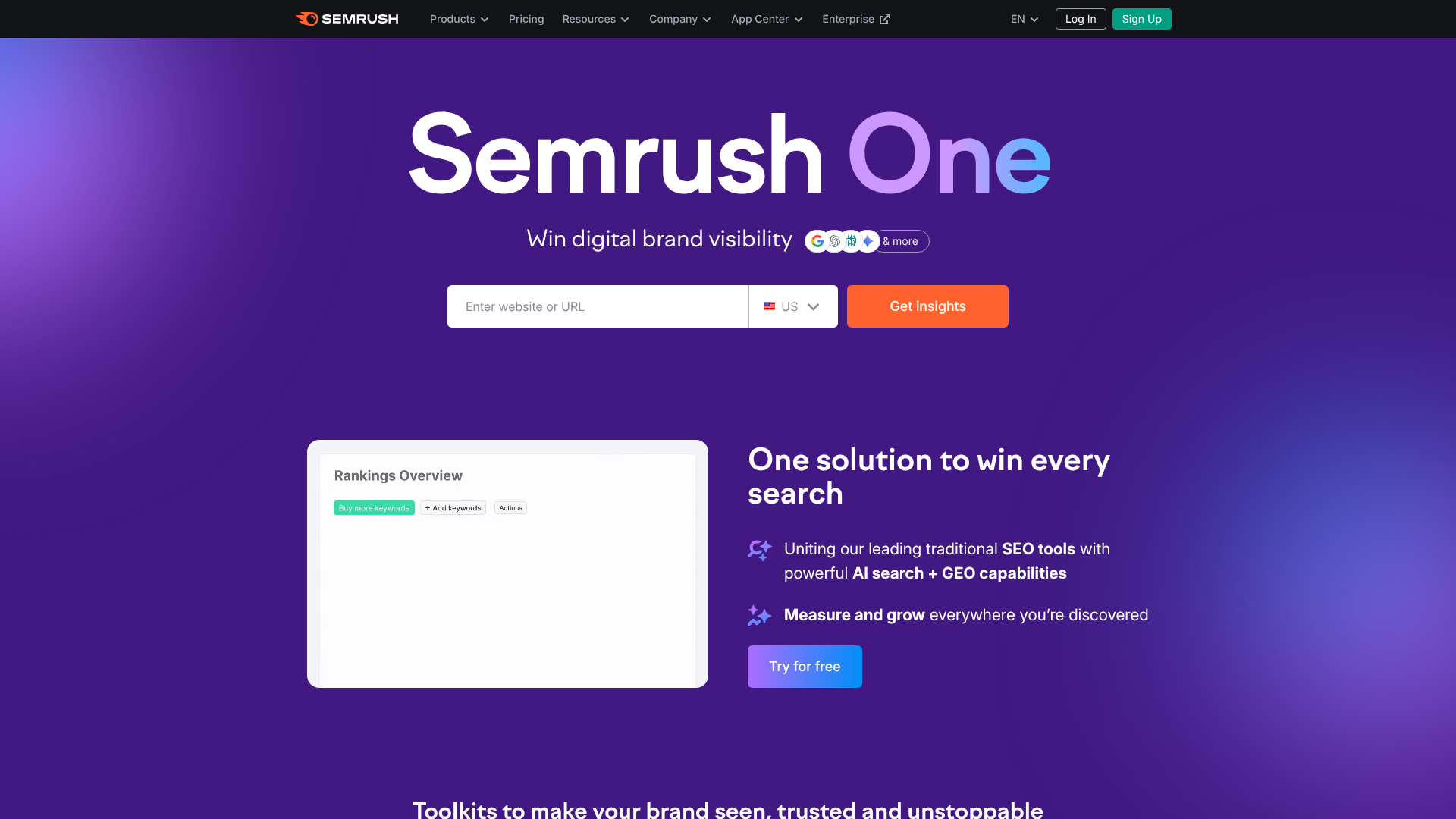
Semrush isn't just one tool; it's a comprehensive digital marketing suite with a specific and powerful focus on competitive intelligence. Its interconnected toolkits allow you to build a 360-degree view of any competitor's online footprint. Before we dive into the step-by-step process, it's helpful to understand the key tools you'll be using for your semrush competitor research.
At the core of the platform are several key reports and tools designed for deep analysis:
- Domain Overview: Your starting point for a quick, high-level snapshot of any domain's online health, including organic traffic, paid traffic, backlinks, and top keywords.
- Organic Research: This tool lets you dig deep into a competitor's SEO performance, showing you all the keywords they rank for, their top pages, and their ranking fluctuations over time.
- Keyword Gap: A powerful comparison tool that shows you the keyword overlaps and gaps between your site and up to four competitors.
- Backlink Analytics & Backlink Gap: These tools allow you to dissect a competitor's entire backlink profile and identify domains that link to them but not to you.
- Traffic Analytics: Provides estimations of a website's overall traffic, user engagement metrics, and traffic sources, giving you insight into their broader marketing channels.
- Social Media Tracker: Helps you monitor competitors' social media performance, including audience growth, post frequency, and engagement rates.
Each of these tools provides a different piece of the puzzle. When used together, they create a detailed and actionable picture of your competitive landscape.
Step 1: How to Identify Your True Competitors Using Semrush
The first step in any effective competitor analysis is knowing who you're actually up against. Many businesses make the mistake of only focusing on their direct business competitors—the companies that sell similar products or services. However, in the world of SEO, your competitors are any website that ranks for the keywords you want to rank for, even if they aren't a direct business rival.
For example, a company selling project management software might find itself competing with industry blogs, review sites, and news publications for keywords like "best productivity tips for teams". Semrush makes identifying these SEO competitors straightforward. Start by navigating to the Organic Research tool and entering your own domain.
From there, click on the "Competitors" tab. Semrush will generate a report showing all the domains that compete with you in Google's top 20 organic search results. The report includes a visual map and a table that lists each competitor, their "Competition Level" (based on the number of shared keywords and the competitor's total keyword count), and the number of common keywords you share. This list is your starting point.
You should analyse it to select 3-5 of your closest and most relevant competitors for a deeper dive in the following steps.

Step 2: Analysing Competitor Keywords with a Semrush Analysis
Once you've identified your key competitors, the next step is to uncover their keyword strategy. You want to find the valuable keywords that are driving traffic to their site, especially those you aren't currently targeting. This is where the Keyword Gap tool in Semrush becomes indispensable.
The Keyword Gap tool allows you to compare your domain's keyword profile against up to four competitors simultaneously. To begin, enter your domain in the "You" field and your selected competitors in the subsequent fields. Semrush will then generate a detailed report showing how your keyword profiles intersect.
How To Do Competitor Analysis In Semrush 2025 (Step-by …
The most valuable insights often come from using the comparison filters at the top of the report:
- Shared: Keywords where all entered domains have a ranking.
- Missing: Keywords where all your competitors rank, but you do not.
- Weak: Keywords where you rank, but lower than all your competitors.
- Strong: Keywords where you rank higher than all your competitors.
- Unique: Keywords where only one of the domains (usually a competitor) ranks.
For finding new opportunities, the "Missing" and "Weak" filters are pure gold. The "Missing" list gives you a ready-made set of relevant keywords to target with new content. The "Weak" list shows you which of your existing pages need to be optimised or improved to climb the rankings. You can further refine these lists by filtering for keyword difficulty (KD%), search volume, and CPC to prioritise the most valuable and attainable keywords first.
Step 3: Evaluating Competitor Backlink Profiles
Keywords get you on the map, but backlinks are what give your website authority and credibility in the eyes of search engines. A strong backlink profile from reputable websites is a powerful ranking factor. Analysing your competitors' backlinks helps you understand how they've built their authority and reveals opportunities for you to do the same.
Semrush offers two primary tools for this: Backlink Analytics and Backlink Gap. Start with Backlink Analytics by entering a competitor's domain. This report gives you a high-level overview, including their Authority Score (a Semrush metric for domain strength), the total number of referring domains, and a list of their newest and most impactful backlinks. Pay close attention to the types of sites linking to them.
Are they industry blogs, news sites, or directories. This tells you where they are focusing their outreach efforts.
Next, use the Backlink Gap tool. Similar to the Keyword Gap tool, you enter your domain and up to four competitors. The tool then generates a list of all the websites that link to your competitors but not to you. This is one of the most actionable reports in any competitor analysis tool.
It provides a direct roadmap for your link-building campaigns. You can export this list, vet the domains for quality and relevance, and then reach out to them with a compelling reason to link to your site as well.
Pro Tip: When analysing competitor backlinks, don't just look at the number of links. Focus on quality. A single link from a highly authoritative and relevant website like a major industry publication is far more valuable than dozens of links from low-quality directories. Use the Authority Score in Semrush to help prioritise your outreach targets.
Step 4: Using Semrush for Competitor Traffic Analysis

While SEO is a major driver of website traffic, it's rarely the only one. A comprehensive semrush analysis should also look at a competitor's overall traffic patterns to understand their complete marketing mix. For this, you'll use the Traffic Analytics tool. It's important to note that this tool provides estimates based on clickstream data, but it's incredibly useful for directional insights.
Enter a competitor's domain, and the tool will provide a wealth of information. You can see estimated monthly visits, unique visitors, and key engagement metrics like average visit duration and bounce rate. This helps you benchmark your own site's performance. A competitor with high traffic but a very high bounce rate might have a user experience problem you can learn from.
One of the most insightful reports within Traffic Analytics is the "Traffic Journey" chart. This shows you where their traffic is coming from (Direct, Referral, Search, Social, Paid) and where users go next. If you see a competitor gets 40% of their traffic from social media, it's a clear signal that they have a strong social strategy worth investigating. The "Top Pages" report is also valuable, as it shows which of their pages attract the most visitors, helping you identify their most successful content pillars.
Beyond SEO: Social Media Competitor Analysis with Semrush
Your competitors' digital footprint extends beyond their website and search engine rankings. Social media is a key channel for brand building, audience engagement, and even traffic generation. Semrush's Social Media Tracker allows you to extend your competitive analysis to major platforms like Facebook, X (formerly Twitter), Instagram, LinkedIn, and Pinterest.
Setting up the tool is simple. You create a project for your domain and then add the social media profiles of the competitors you identified earlier. The tracker will then begin to collect data, providing you with a comparative dashboard. You can easily see how your audience growth compares to theirs, which platform drives the most engagement for them, and how frequently they post.
The tool's content analysis feature is particularly useful. It highlights your competitors' top-performing posts based on engagement rates. By analysing these posts, you can identify the topics, formats (e.g., video, images, carousels), and tones of voice that resonate most with your shared target audience. This insight can directly inform your own social media content calendar, helping you create content that is more likely to perform well without the trial and error.
Expanding Your View: Market Research with Semrush Data
While granular analysis of specific competitors is essential, it's also important to understand the broader market landscape. Semrush's Market Explorer tool elevates your analysis from a one-on-one comparison to a high-level market overview. This is perfect for identifying emerging trends, discovering new players, and understanding your overall market share.
Enter your domain, and Market Explorer will define your industry and generate a report on the market as a whole. One of its key features is the "Growth Quadrant". This chart plots the key players in your market on a grid based on their traffic volume and traffic growth rate. It categorises them into four segments:
- Leaders: High traffic, established players.
- Game Changers: Smaller players with rapid growth.
- Niche Players: Focused competitors with stable, targeted traffic.
- Established Players: Large domains with stagnant or declining growth.
This quadrant is incredibly valuable for strategic planning. It not only confirms who the dominant leaders are but also highlights the "Game Changers"—the up-and-coming competitors you need to watch closely. The tool also provides market-wide traffic trends and audience demographics, helping you understand if the market is growing and who your collective audience is.
Real-World Impact: Success Stories Using Semrush for Competitor Insights
Theory is one thing, but seeing how these tools drive real results makes the value clear. Here are a couple of hypothetical case studies illustrating how a smart semrush competitor research strategy can lead to significant business growth.
Case Study 1: The SaaS Start-up
A new AI-powered project management tool enters a crowded market dominated by giants like Asana and Trello. They know they can't compete on broad, high-difficulty keywords. Using the Keyword Gap tool, they analyse their top three competitors and filter for keywords with a difficulty score under 40 that are "Missing" from their own profile. They uncover dozens of long-tail keywords like "best project management software for creative agencies" and "how to automate client reporting".
They build a content strategy around these niche topics, creating detailed blog posts and tutorials. Within six months, they start ranking on the first page for these less competitive terms, driving highly qualified leads and establishing a foothold in the market.
Case Study 2: The Niche E-commerce Store
An online store selling sustainable, handmade pottery wants to increase its organic traffic. They use the Backlink Gap tool to compare their site against three larger home goods retailers. They discover that their competitors have all been featured on several popular interior design and eco-friendly lifestyle blogs. The store now has a targeted list of high-authority websites that are already interested in their niche.
They craft a personalised outreach campaign, offering to provide a unique piece for a giveaway or write a guest post about sustainable home decor. They successfully secure backlinks from five of these blogs, resulting in a noticeable boost in their Authority Score, referral traffic, and organic rankings for key product categories.
Best Practices for Actioning Your Competitor Analysis Insights
Gathering data is only half the battle. The real value of a competitor analysis semrush provides comes from how you interpret and act on the insights. Simply having the data isn't enough; you need a framework for turning it into a strategic advantage.
Don't Just Copy, Innovate: The goal is not to mirror your competitor's every move. If you find they have a top-ranking article on a certain topic, your goal should be to create a piece of content that is significantly better—more comprehensive, more up-to-date, with better visuals, or offering a unique perspective. This is often referred to as the "skyscraper technique" or creating 10x content.
Prioritise with a SWOT Analysis: Organise your findings into a simple SWOT framework (Strengths, Weaknesses, Opportunities, Threats). For example, a competitor's strong backlink profile is a Threat, but the keywords they are missing is an Opportunity. This helps you prioritise your actions, focusing first on the biggest opportunities and most pressing threats.
Monitor on a Regular Basis: The digital landscape is constantly changing. New competitors emerge, and existing ones adapt their strategies. Your competitor analysis should not be a one-time project. Set up a recurring schedule—monthly or quarterly—to revisit the data in Semrush, track changes, and adjust your strategy accordingly. Tools like Position Tracking can be configured to send you regular updates on your ranking performance against your rivals.
Pro Tip: Integrate your findings across all marketing functions. The keyword insights you gather can inform your PPC ad copy. The popular content topics you identify can inspire your next social media campaign. A truly effective competitor analysis breaks down silos and informs the entire marketing strategy.
Frequently Asked Questions (FAQ)
Does Semrush do competitor analysis?
Yes, absolutely. Competitor analysis is one of Semrush's core strengths. It offers a comprehensive suite of tools specifically designed for this purpose, including Organic Research, Keyword Gap, Backlink Gap, Traffic Analytics, and Market Explorer, allowing you to analyse every facet of a competitor's digital strategy.
What is a competitor analysis in SEO?
A competitor analysis in SEO is the process of researching the keywords, content, backlinks, and overall search engine performance of your rivals. The goal is to identify their strategic strengths and weaknesses to find opportunities to improve your own SEO performance and gain a larger share of organic traffic.
Which tool is best for competitor analysis?
While there are several excellent tools on the market, Semrush is widely regarded as one of the best and most comprehensive platforms for competitor analysis. Its strength lies in the integration of its various toolkits, allowing you to move from a high-level domain overview to granular keyword and backlink analysis all within a single interface.
Can ChatGPT do a competitor analysis?
ChatGPT and other large language models can assist with certain aspects of competitor analysis, such as generating ideas for content or summarising a competitor's website content. However, they cannot access the real-time, proprietary data needed for a deep technical analysis. They cannot crawl backlink profiles, analyse keyword ranking data, or estimate traffic metrics like a specialised competitor analysis tool such as Semrush can.
Final Thoughts: Gaining Your Competitive Edge
In today's competitive digital environment, flying blind is not an option. A data-driven approach to understanding your rivals is essential for sustainable growth. By systematically working through the steps outlined in this guide, you can transform Semrush from a simple SEO tool into a powerful competitive intelligence platform.
From identifying who you're truly competing against to uncovering specific keyword and backlink opportunities, the insights are there for the taking. The key is to move from data collection to strategic action. Use the information you gather to create better content, build a stronger backlink profile, and make smarter decisions across all your marketing channels.
By making competitor analysis a regular part of your marketing rhythm, you ensure your strategy remains agile, informed, and always one step ahead. Ready to uncover your competitors' secrets and find your path to the top of the SERPs?
Explore the Semrush competitor analysis toolkit today.