11 Best AI Writing Tools in 2026 for Marketers (Reviewed & Ranked)
Creating high-quality content consistently is one of the biggest challenges for marketers, writers, and business owners. From writer's block to tight deadlines, the pressure is always on. This is where the strategic use of ai writing tools can make a significant difference, acting as a powerful assistant to streamline your workflow and boost creativity. These platforms are no longer a novelty; they are essential for staying competitive.
- What You'll Learn
- What Are AI Writing Tools and How Do They Work?
- The Core Benefits of Using AI Writing Software
- 1. Overcome Writer's Block Instantly
- 2. Dramatically Increase Content Production
- 3. Enhance Writing Quality and Consistency
- 4. Improve SEO and Content Optimisation
- The 11 Best AI Writing Tools in 2026: A Detailed Comparison
- 1. Jasper (formerly Jarvis)
- 2. Writesonic
- 3. QuillBot
- 4. Grammarly
- 5. ChatGPT
- 6. Copy.ai
- 7. Rytr
- AI Writing Tools: Feature Comparison
- How to Use Writing Tools AI for Effective Content Creation
- The Growing Impact of AI on Professional Writing Careers
- Navigating the Ethical Maze of Automated Writing Tools
- The Future of AI Writing: What's Next?
- FAQ: Answering Your Questions About AI Writing Tools
- What is the best AI tool for writing?
- Is it illegal to publish a book written by AI?
- Can I use ChatGPT as a writer?
- Is ChatGPT writer free?
- Final Thoughts
This guide breaks down the top AI writing software available today. We'll explore how they work, compare their features, and help you choose the right one for your specific needs. Whether you're drafting blog posts, creating ad copy, or refining your emails, there's a tool here that can help you do it better and faster.
What You'll Learn
- What AI Writers Do: AI writing tools use large language models (LLMs) to generate, edit, and optimise human-like text based on your prompts and instructions.
- Key Benefits: The primary advantages include overcoming writer's block, dramatically increasing content production speed, improving grammatical accuracy, and optimising content for search engines.
- Top Tools for Different Needs: Platforms like Jasper excel at long-form content and marketing copy, while tools like Grammarly focus on polishing and perfecting existing text.
- Human Oversight is Crucial: While powerful, these tools are assistants, not replacements. Human editing, fact-checking, and strategic direction are essential for producing high-quality, accurate, and original content.
- Ethical Use is Key: Understanding the ethical implications, such as plagiarism and transparency, is vital for responsible use of automated writing tools in a professional context.
What Are AI Writing Tools and How Do They Work?
At its core, an AI writing tool is a piece of software that uses artificial intelligence, specifically natural language processing (NLP) and natural language generation (NLG), to create text. Think of it as a highly advanced predictive text system. You give it an input—a prompt, an outline, or a few keywords—and it generates coherent, contextually relevant sentences and paragraphs based on the vast amount of data it was trained on.
The technology behind most modern AI writing software is a Large Language Model (LLM), like OpenAI's GPT (Generative Pre-trained Transformer) series. These models have been trained on billions of text examples from the internet, including books, articles, and websites. This training allows them to understand grammar, context, tone, and style, enabling them to mimic human writing with surprising accuracy.
The process is straightforward. When you enter a prompt, the AI analyses your request, identifies the key concepts, and then predicts the most likely sequence of words to form a logical and readable response. The best tools allow you to guide this process by specifying the desired tone of voice (e.g., professional, witty, casual), target audience, and content format, giving you greater control over the final output.
The Core Benefits of Using AI Writing Software

Integrating AI into your writing process offers a range of powerful benefits that go far beyond simply writing faster. These tools can fundamentally change how you approach content creation, freeing up time for more strategic tasks.
1. Overcome Writer's Block Instantly
Every writer has stared at a blank page, unsure where to start. AI writing tools are the perfect remedy for this. By providing a simple prompt, you can generate outlines, introductory paragraphs, or a list of ideas to kickstart your creativity. This initial momentum is often all that's needed to get the words flowing.
2. Dramatically Increase Content Production
Speed is a major advantage. An AI can produce a first draft of a blog post, a series of social media captions, or multiple versions of ad copy in minutes—a task that could take a human writer hours. This acceleration allows content teams to scale their output significantly without sacrificing quality, meeting demanding content calendars and marketing goals more easily.
3. Enhance Writing Quality and Consistency
Even experienced writers make mistakes. Tools like Grammarly use AI to go beyond basic spell-checking, offering suggestions on grammar, punctuation, clarity, and tone. This ensures your writing is not only error-free but also clear, professional, and consistent with your brand's voice across all channels.
4. Improve SEO and Content Optimisation
Many automated writing tools are built with SEO in mind. They can help you identify relevant keywords, generate meta descriptions, and structure your content in a way that is friendly to search engines. Platforms like Semrush offer AI-powered features to help you create content that is specifically designed to rank for target keywords, analysing top results to guide your writing.
The 11 Best AI Writing Tools in 2026: A Detailed Comparison
Choosing the right AI writing assistant depends on your budget, use case, and specific needs. Here’s a breakdown of the top contenders in 2026, including their strengths, weaknesses, and ideal users.
1. Jasper (formerly Jarvis)
Jasper is one of the most well-known and powerful AI writing tools on the market, designed primarily for marketing teams, entrepreneurs, and content creators. It excels at producing high-quality, long-form content like blog posts and marketing copy, and its 'Brand Voice' feature allows it to learn and mimic your specific style for consistent output.
It offers a massive library of over 50 templates for different content types, from AIDA framework ad copy to video scripts and blog post outlines. Its 'Boss Mode' feature provides a long-form editor that gives you more control over the generation process, making it a favourite among serious content producers. While it's a premium tool, its feature set often justifies the cost for businesses focused on scaling content.
Pros
- High-Quality Output: Consistently generates well-written, coherent, and creative content.
- Brand Voice Feature: Learns your unique style and tone for on-brand content every time.
- Versatile Templates: A huge library of templates covers almost any marketing or content need.
Cons
- Higher Price Point: It's one of the more expensive options, which may not be suitable for individuals or small businesses.
- Learning Curve: The sheer number of features can be overwhelming for new users.
2. Writesonic
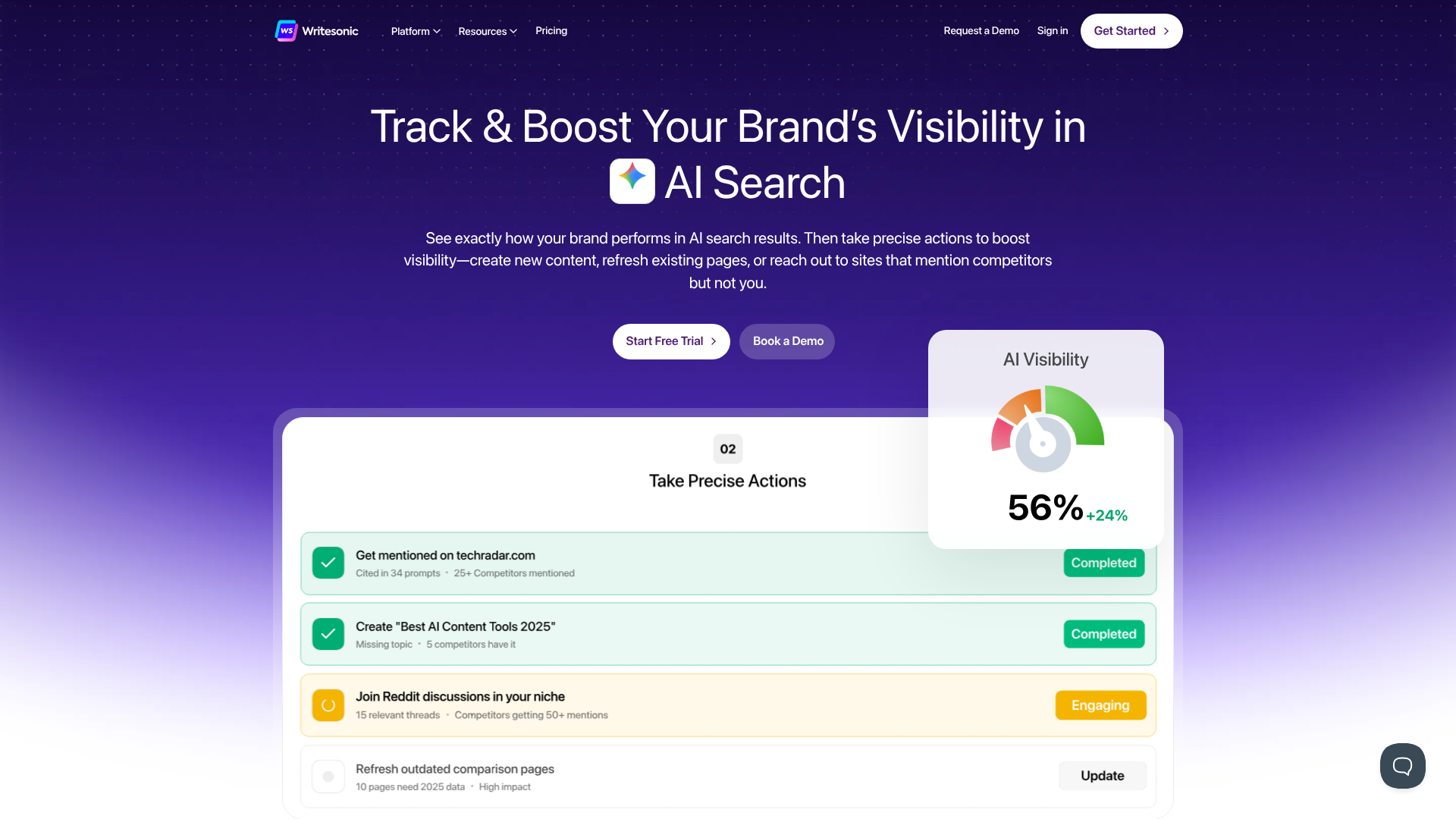
Writesonic is a versatile AI writer that positions itself as an all-in-one solution for content creation, SEO, and AI chatbot development. It's particularly strong for creating SEO-optimised articles and blog posts, with features that integrate keyword research and competitor analysis directly into the writing process. Its 'Photosonic' feature also allows for AI image generation.
One of its standout features is the AI Article Writer, which can generate a full 1,500-word article from a single topic idea. It also offers a wide range of templates for everything from landing pages to Google Ads. With a generous free trial and more affordable plans than some competitors, Writesonic is an excellent option for bloggers, freelancers, and marketing agencies.
Pros
- Strong SEO Features: Excellent for creating content designed to rank on search engines.
- All-in-One Platform: Combines writing, image generation, and chatbot creation.
- Competitive Pricing: Offers a free trial and affordable plans, providing great value.
Cons
- Output Can Be Repetitive: Long-form content may sometimes require more editing to ensure variety.
- Interface Can Feel Cluttered: With so many features, the user interface can be a bit busy.
3. QuillBot
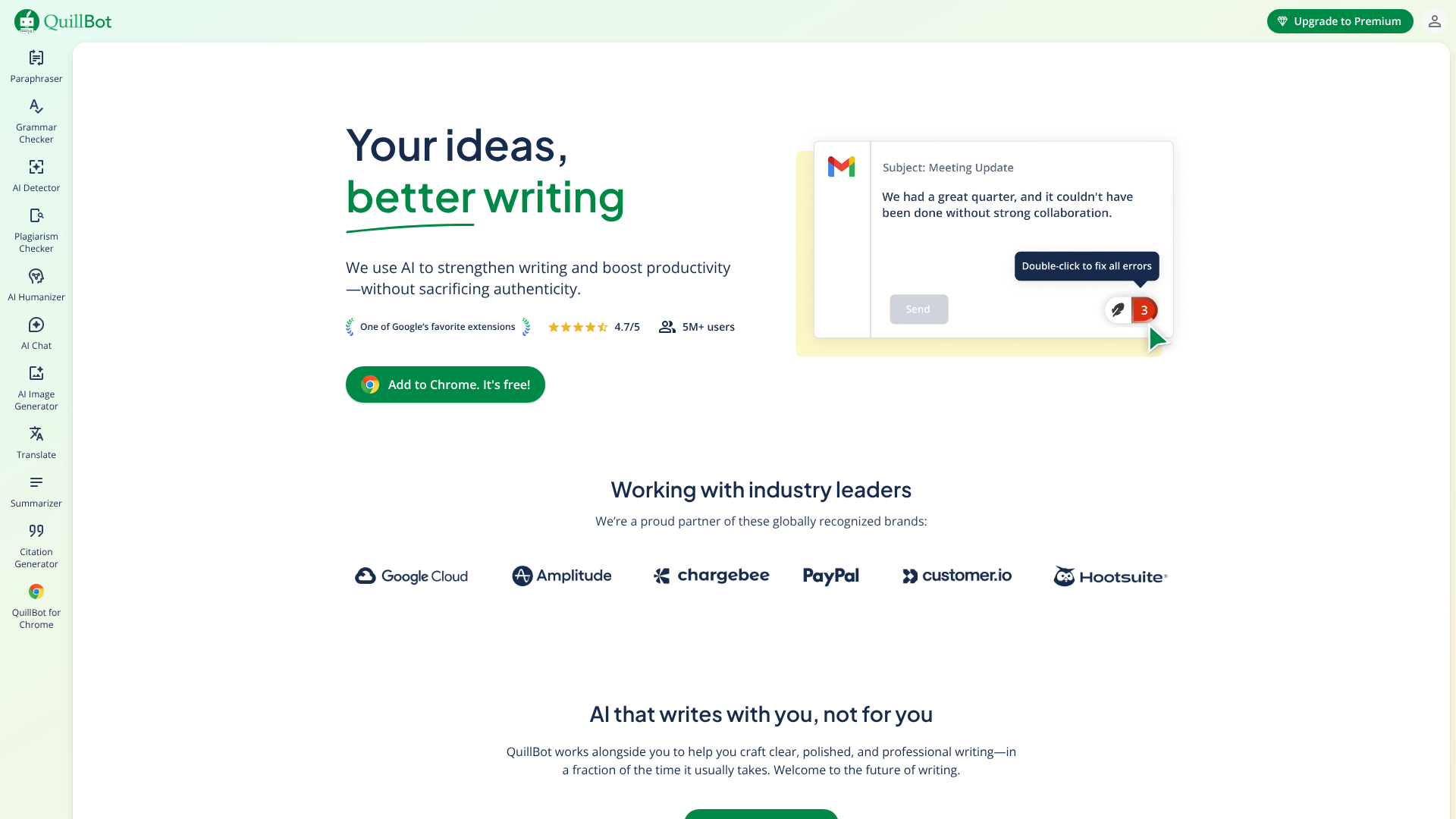
While many tools focus on generating new content, QuillBot shines as a writing assistant focused on improving existing text. Its core feature is a best-in-class paraphrasing tool that helps you rephrase sentences, paragraphs, or entire articles to improve clarity, change the tone, or avoid plagiarism. It offers multiple modes, such as 'Standard', 'Fluency', and 'Creative', to give you different rephrasing options.
Beyond paraphrasing, QuillBot also includes a grammar checker, summariser, and citation generator, making it an indispensable tool for students, academics, and professionals who need to refine their writing. Its intuitive interface and generous free plan make it highly accessible. The premium version unlocks more features, like a plagiarism checker and faster processing speeds.
Pros
- Excellent Paraphrasing Tool: The best on the market for rephrasing text effectively.
- User-Friendly: Simple, clean interface that is very easy to use.
- Multi-functional: Includes grammar checking, summarising, and citation tools.
Cons
- Limited Content Generation: It's primarily for editing and refining, not creating content from scratch.
- Free Version has Limitations: The free plan has character limits on the paraphraser.
4. Grammarly
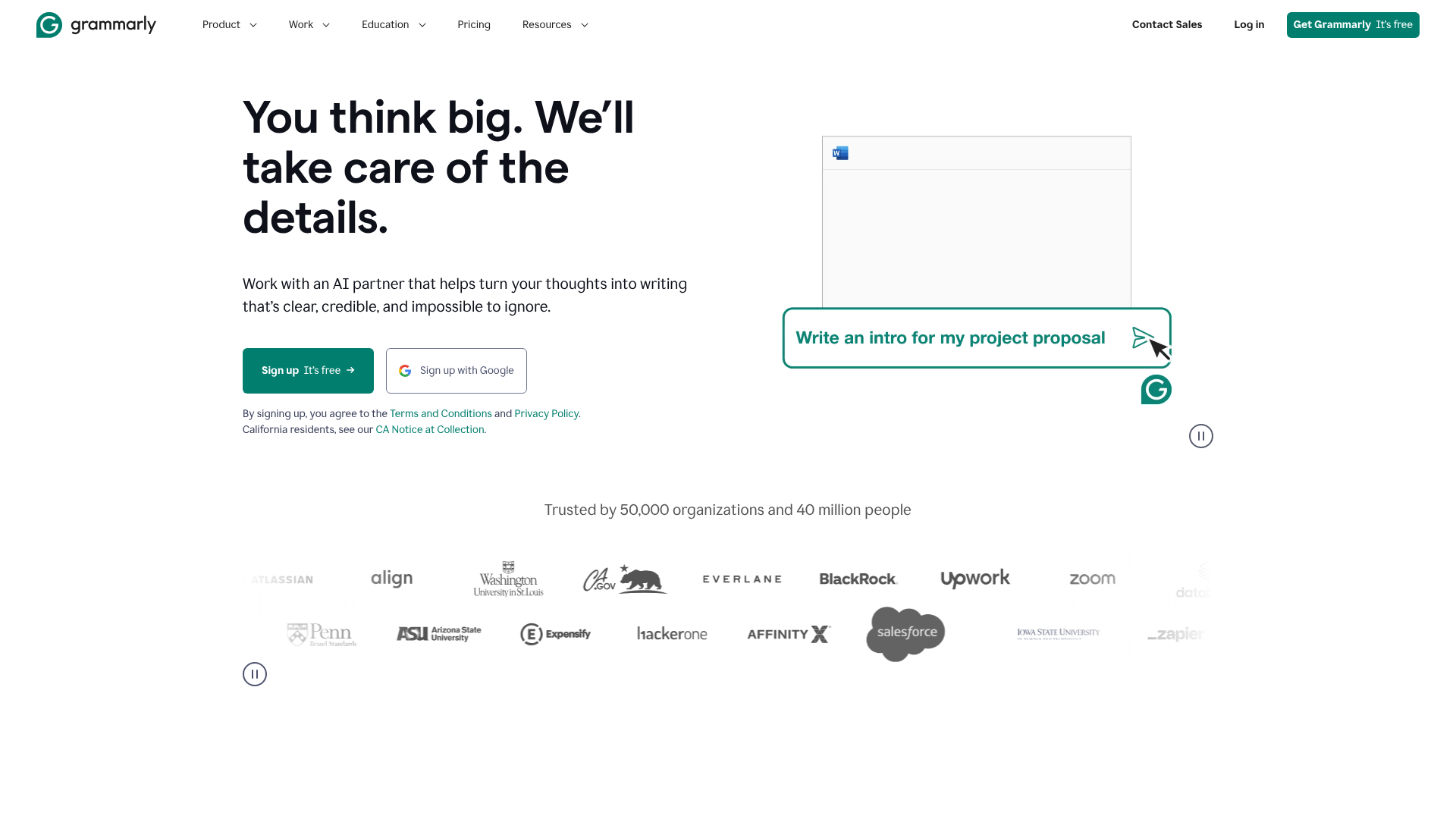
Grammarly is perhaps the most famous writing assistant, known for its powerful grammar, spelling, and punctuation checker. However, it has evolved into a comprehensive AI communication assistant. Its premium version offers advanced features like tone detection, clarity suggestions, and a plagiarism checker. It helps you ensure your writing is not just correct, but also effective and engaging.
Recently, Grammarly has integrated more generative AI features, allowing users to generate text, compose replies, and brainstorm ideas directly within the editor. It integrates seamlessly with browsers, email clients, and word processors, making it a constant companion for anyone who writes professionally. It's an essential tool for ensuring every piece of communication is polished and professional.
Pros
- Top-Tier Proofreading: Unmatched grammar, spelling, and style checking.
- Tone Detector: Helps you adjust your writing to match the intended audience and context.
- Seamless Integration: Works everywhere you write, from Gmail to Google Docs.
Cons
- Generative AI is Less Advanced: Its content generation features are not as powerful as dedicated tools like Jasper.
- Premium is Subscription-Based: The most useful features are locked behind a paid plan.
5. ChatGPT
Developed by OpenAI, ChatGPT is the conversational AI that brought AI writing into the mainstream. Its conversational interface makes it incredibly versatile for a wide range of tasks, from brainstorming and outlining to drafting entire articles, emails, and code. Its ability to understand context and follow complex instructions makes it a powerful creative partner.
The free version (GPT-3.5) is highly capable, but the paid version (ChatGPT Plus with GPT-4) offers more advanced reasoning, better accuracy, and faster response times. It's an excellent all-around tool for anyone looking for a flexible AI assistant, though it lacks the specialised templates and workflows found in dedicated marketing writers.
Pros
- Highly Versatile: Can handle almost any writing task you throw at it.
- Conversational Interface: Easy and intuitive to use for brainstorming and iteration.
- Powerful Free Version: The free model is sufficient for many basic tasks.
Cons
- Lacks Specialised Templates: Not purpose-built for specific marketing tasks like ad copy.
- Potential for Factual Inaccuracies: Always requires fact-checking, especially for complex topics.
6. Copy.ai
Copy.ai is designed to help marketing and sales teams create compelling copy quickly. It offers a suite of tools and over 90 templates tailored for specific business needs, such as writing product descriptions, social media content, and sales emails. Its 'Brand Voice' feature ensures that all generated content aligns with your company's style.
It stands out for its user-friendly interface and its focus on iterative creation, allowing you to generate multiple variations of copy to find the perfect message. Copy.ai also offers a generous free plan that includes a limited number of words per month, making it a great starting point for those new to writing tools AI.
Pros
- Great for Short-Form Copy: Excels at creating ads, social media posts, and product descriptions.
- Generous Free Plan: A great way to test the platform without commitment.
- Intuitive and Easy to Use: Simple for beginners to get started quickly.
Cons
- Long-Form Content is Weaker: Not as strong as Jasper for writing full blog posts.
- Can Be Formulaic: The output can sometimes feel a bit generic without careful prompting.
7. Rytr
Rytr is a popular AI writing assistant known for its simplicity and affordability. It offers a clean, straightforward interface and over 40 use cases, covering everything from blog ideas to YouTube video descriptions. It's a fantastic tool for creators and marketers who need to produce short-form content quickly and efficiently.
One of Rytr's unique features is its built-in plagiarism checker, which provides an extra layer of confidence in the originality of the generated content. Its free plan is one of the most generous available, making it an excellent choice for users on a tight budget who still want access to a powerful AI writer.
Pros
- Very Affordable: Offers a generous free plan and budget-friendly premium options.
- Simple and Fast: The clean interface makes it easy to generate content in seconds.
- Built-in Plagiarism Checker: A useful feature not always found in other tools.
Cons
- Limited Long-Form Capabilities: Better for short snippets of text than full articles.
- Output Quality Can Vary: May require more editing than premium competitors.
AI Writing Tools: Feature Comparison
To help you decide, here's a quick comparison of our top picks.
| Feature | Jasper | Writesonic | QuillBot | Grammarly | ChatGPT |
|---|---|---|---|---|---|
| Best For | Marketing Teams & Long-Form Content | SEO Content & Bloggers | Paraphrasing & Editing | Proofreading & Polishing | General Purpose & Brainstorming |
| Key Feature | Brand Voice & Boss Mode | AI Article Writer 5.0 | Advanced Paraphraser | Tone Detector | Conversational Flexibility |
| Free Plan | No, but offers a trial | Yes, with word limits | Yes, with feature limits | Yes, for basic checks | Yes (GPT-3.5) |
| Starting Price | Visit Jasper for pricing | Visit Writesonic for pricing | Visit QuillBot for pricing | Visit Grammarly for pricing | Free / Plus for $20/month |
How to Use Writing Tools AI for Effective Content Creation
Simply having access to an AI writer isn't enough; you need to know how to use it effectively. The quality of your output is directly related to the quality of your input. This is where the skill of 'prompt engineering' comes into play.
A prompt is the instruction you give the AI. A vague prompt like "write a blog post about dogs" will yield a generic, uninspired result. A detailed prompt, however, will produce much better content. For example:
"Write a 1000-word blog post for new dog owners about the top 5 most important things to do in the first week of bringing a puppy home. Use a friendly and reassuring tone. Include sections on house training, socialisation, feeding schedules, creating a safe space, and the first vet visit."
This detailed prompt gives the AI clear direction on the topic, length, tone, audience, and structure. When using these tools, always aim to provide as much context as possible. Treat the AI as a junior writer who needs clear instructions to succeed. Use it to generate a first draft, then take over to edit, add personal insights, fact-check, and refine the text to match your unique voice.
Pro Tip: Use AI tools for brainstorming and outlining first. Ask for ten different blog title ideas or a detailed outline for an article. This helps structure your thoughts before you even start generating the full text, leading to a more coherent final piece.
The Growing Impact of AI on Professional Writing Careers

The rise of AI has sparked debate about the future of professional writing. However, the consensus among industry experts is that AI is not a replacement for human writers but rather a powerful collaborator. It automates the more tedious aspects of writing—like drafting, researching basic facts, and proofreading—freeing up writers to focus on higher-value tasks.
These tasks include strategy, critical thinking, storytelling, and adding unique human experiences and perspectives that an AI cannot replicate. The role of a writer is evolving from purely a creator to that of an AI editor and content strategist. Skills like prompt engineering, AI output editing, and fact-checking are becoming increasingly important.
Writers who embrace these tools can become more productive and valuable. They can take on more projects, deliver work faster, and spend more time on the creative elements that truly set their content apart. Rather than fearing obsolescence, writers should view AI as a tool that enhances their abilities and allows them to operate at a higher strategic level.
Navigating the Ethical Maze of Automated Writing Tools
With great power comes great responsibility. The use of automated writing tools raises several important ethical questions that users must consider to maintain integrity and trust with their audience.
First is the issue of plagiarism. While most AI tools are designed to generate original text, they learn from existing data, and there's a small risk they might produce content that is too similar to their training sources. It's crucial to use a plagiarism checker to ensure the originality of any AI-generated text you plan to publish.
Second is factual accuracy. LLMs are known to 'hallucinate'—that is, to invent facts, statistics, or sources that sound plausible but are entirely false. All information generated by an AI, especially data and claims, must be rigorously fact-checked by a human expert before publication. Publishing inaccurate information can severely damage your credibility.
Finally, there's the matter of transparency. Should you disclose to your audience when content has been created with the help of AI. While there are no firm rules yet, many believe in transparency. A simple disclaimer can help manage audience expectations and build trust.
The goal is to use AI as a tool to assist human creativity, not to deceive.
The Future of AI Writing: What's Next?
The technology behind AI writing is advancing at an incredible pace. We can expect future tools to become even more sophisticated, intuitive, and integrated into our daily workflows. One of the most exciting trends is the move towards multimodal AI, where models can understand and generate content across different formats, not just text.
For example, you might give an AI a blog post, and it could automatically generate a summary, a social media campaign, a script for a short video, and even the video itself. Tools like Pictory are already turning text into video, while platforms like Synthesia create AI-generated video presenters. This convergence of text, image, and video generation will create a more unified content creation ecosystem.
We can also anticipate more advanced personalisation. Future AI writers will have a deeper understanding of your personal style, your brand's voice, and your audience's preferences, allowing them to create highly tailored content with minimal prompting. The line between human and AI-generated text will continue to blur, making the role of the human editor and strategist more critical than ever.
FAQ: Answering Your Questions About AI Writing Tools
Here are answers to some of the most common questions people have about using AI for writing.
What is the best AI tool for writing?
There's no single 'best' tool—it depends entirely on your needs. For professional marketers and teams needing high-quality, long-form content, Jasper is often considered a top choice. For bloggers and SEO specialists, Writesonic offers a powerful and affordable solution. For academic and professional writing that requires more editing and rephrasing than generation, QuillBot is an excellent assistant.
Is it illegal to publish a book written by AI?
It is not illegal to publish a book written with the assistance of AI. However, copyright law is still evolving in this area. In the United States, the Copyright Office has stated that works created solely by AI without any human authorship are not eligible for copyright protection. If a human has significantly edited, arranged, or modified the AI-generated text, the work may be copyrightable.
Platforms like Amazon's KDP allow AI-assisted content but require authors to disclose its use.
Can I use ChatGPT as a writer?
Yes, you can absolutely use ChatGPT as a writing assistant. It's incredibly versatile for brainstorming ideas, creating outlines, drafting sections of text, and rewriting sentences. However, it's best used as a collaborative partner. You should always fact-check its output, edit it for style and tone, and add your own unique insights to create a high-quality final product.
Is ChatGPT writer free?
Yes, there is a free version of ChatGPT that uses the GPT-3.5 model. It is very powerful and sufficient for many writing tasks. There is also a paid subscription called ChatGPT Plus, which gives you access to more advanced models like GPT-4, providing better reasoning, higher accuracy, and faster responses, along with other features like web browsing and data analysis.
Final Thoughts
AI writing tools have firmly established their place in the modern content creator's toolkit. They are no longer a futuristic concept but a practical solution for boosting productivity, enhancing creativity, and scaling content production. From sophisticated platforms like Jasper and Writesonic to specialised assistants like QuillBot and Grammarly, there is a tool available for every need and budget.
The key to success is to view these tools not as a replacement for human writers but as powerful collaborators. The best results come from a partnership where AI handles the heavy lifting of drafting and idea generation, while you provide the strategic direction, critical thinking, and unique human touch that brings content to life.
If you're looking for an all-around powerful tool for marketing content, Jasper is worth exploring. For those focused on creating SEO-optimised blog content at an affordable price, Writesonic is an excellent choice. By embracing these tools, you can spend less time on the mechanics of writing and more time on the creative strategy that drives results.