


Ahrefs vs Moz vs SEMrush: The 2026 Comparison for Marketers
Choosing the right SEO toolkit is one of the most critical decisions a digital marketer can make. With the right data, you can craft strategies that dominate search engine results pages (SERPs), drive traffic, and grow revenue. The debate over Ahrefs vs Moz vs SEMrush has been ongoing for years because they represent the top tier of SEO software, each with a passionate user base and a unique set of strengths. This guide breaks down the features, pricing, and ideal use cases for each platform to help you make an informed decision.
- Quick Summary
- An Introduction to the SEO Titans: Ahrefs, Moz, and SEMrush
- Ahrefs Deep Dive: The Backlink King
- Moz Pro Explored: The Beginner's Ally
- SEMrush Unpacked: The All-in-One Marketing Suite
- SEO Tools Showdown: Ahrefs vs Moz vs SEMrush Feature by Feature
- Keyword Research: Who Finds the Best Opportunities?
- Backlink Analysis: The Data Accuracy Debate
- Site Auditing: Uncovering Technical SEO Flaws
- Pricing Models: Which Tool Offers the Best Value?
- User Experience and Interface: Which Platform is Easiest to Use?
- Use Cases: The Right Tool for the Right Job
- Best for SEO Agencies and Large Teams
- Best for Freelancers and Small Businesses
- Best for Content Marketers and Link Builders
- Best for Beginners Learning SEO
- Frequently Asked Questions (FAQ)
- Which is better, SEMrush or Ahrefs?
- Which is better, Moz or SEMrush?
- What is the most accurate SEO tool?
- What is Ahrefs best for?
- Is Ahrefs good for keyword research?
- Final Thoughts: Choosing Your SEO Champion
Making the wrong choice can mean wasted budget and missed opportunities. While all three platforms offer core SEO functionalities like keyword research, backlink analysis, and site audits, their approaches and data depths vary significantly. This comparison will move beyond the marketing claims to give you a clear picture of which tool aligns best with your specific goals, whether you're a solo freelancer, part of a large agency, or an in-house marketing professional.
Quick Summary
- Ahrefs is for Link Builders & Content Strategists: It boasts the industry's leading backlink index and exceptional keyword research tools, making it the top choice for professionals focused heavily on off-page SEO and content-driven growth. Its interface is clean and fast.
- SEMrush is the All-in-One Marketing Powerhouse: It offers the most comprehensive suite of tools, covering SEO, PPC, content marketing, social media, and market research. It's the best option for agencies and marketing teams who need a single platform to manage diverse digital campaigns.
- Moz Pro is the Best for SEO Beginners & Education: With a user-friendly interface, industry-standard metrics like Domain Authority, and a wealth of educational resources, Moz is an excellent starting point for those new to SEO or small businesses needing solid, actionable insights.
- The Verdict Depends on Your Needs: There is no single 'best' tool. The right choice comes down to your primary focus, team size, and budget. Ahrefs excels in data depth for SEO specialists, SEMrush in feature breadth for marketers, and Moz in accessibility for learners.
An Introduction to the SEO Titans: Ahrefs, Moz, and SEMrush
Before we dive into a feature-by-feature breakdown, it's important to understand the philosophy and history behind each of these platforms. Their origins often explain their current strengths and where they focus their development resources. Each tool started with a specific focus and has since expanded, but their core DNA remains a key differentiator.
Ahrefs began its journey in 2011 primarily as a backlink analysis tool. It quickly built a reputation for having the largest and most frequently updated index of live backlinks, becoming the go-to resource for link builders and SEO professionals who needed accurate off-page data. Over the years, Ahrefs has evolved into a comprehensive SEO suite, adding powerful tools for keyword research, content analysis, rank tracking, and site auditing. Despite its expansion, its identity is still deeply rooted in its best-in-class backlink data.
Moz is one of the original players in the SEO software space, founded as SEOmoz in 2004 by Rand Fishkin. It started as a blog and consulting firm, building a community around SEO education before launching its software. This educational focus is still central to Moz's brand. It's famous for popularising metrics like Domain Authority (DA) and Page Authority (PA), which have become industry standards for gauging a website's ranking potential.
Moz Pro is designed to be accessible, making complex SEO concepts understandable for a broader audience.
SEMrush was founded in 2008 with a strong focus on competitor analysis, particularly for paid search (PPC). It gave marketers an unprecedented view into their competitors' advertising strategies and keyword rankings. From this starting point, SEMrush has aggressively expanded to become a true all-in-one digital marketing platform. It now includes robust toolkits for SEO, content marketing, social media management, and market research, making it a favourite among agencies and marketing departments that handle more than just organic search.
Ahrefs Deep Dive: The Backlink King
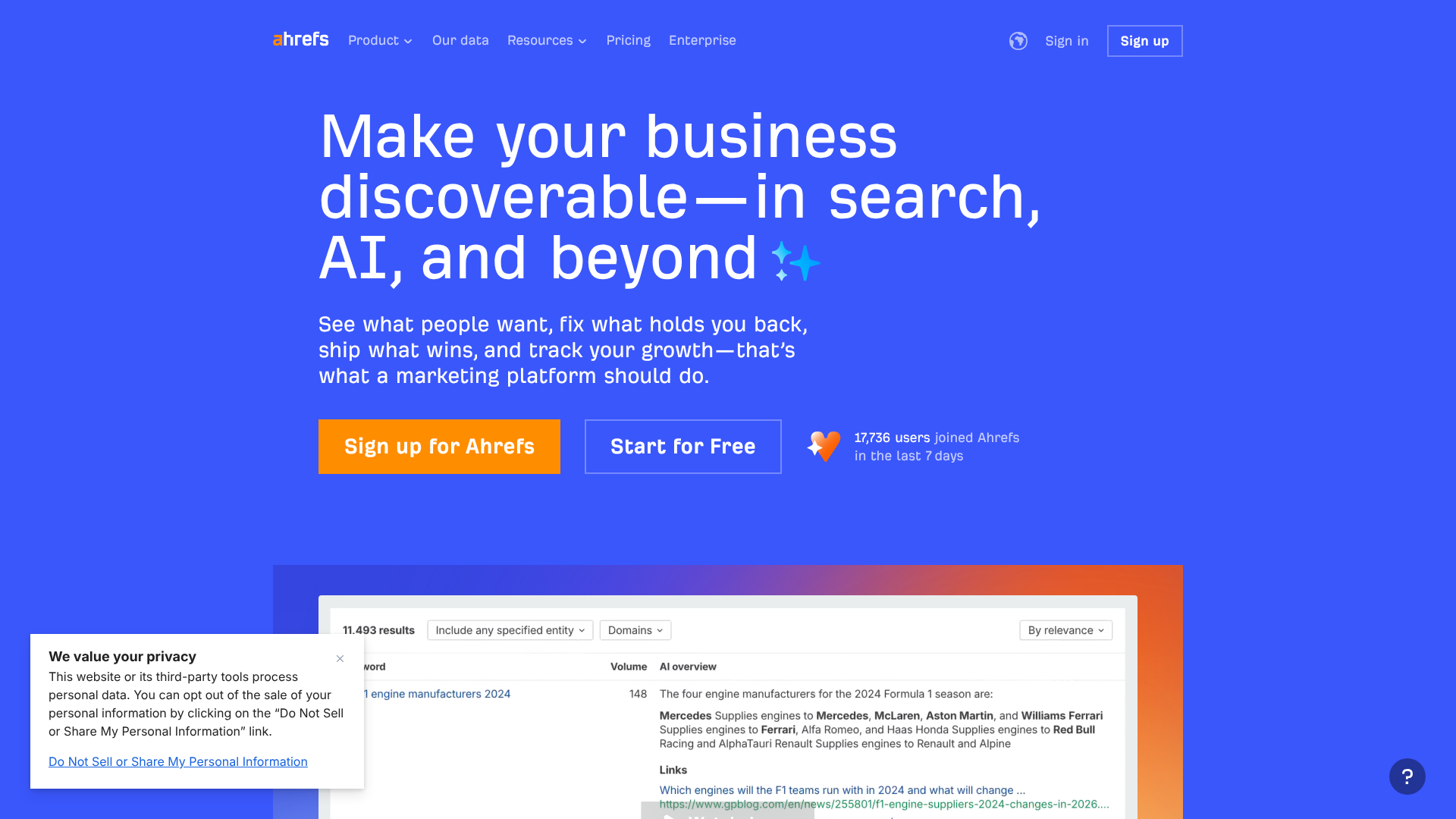
Ahrefs has built its reputation on the back of its phenomenal backlink index. It uses a proprietary crawler that is second only to Google's in terms of size and speed, allowing it to provide incredibly detailed and fresh data on who is linking to whom across the web. For any campaign that relies heavily on link building or competitor backlink analysis, Ahrefs is often considered non-negotiable.
Beyond links, its Keywords Explorer is a standout feature. It provides deep insights into search volume, keyword difficulty, and click data, often revealing how many searches result in no clicks at all. The Content Explorer tool helps you find the most shared and linked-to content in your niche, providing a clear roadmap for creating content that performs. The Site Audit tool is also fast and thorough, identifying technical SEO issues with clear, actionable recommendations.
Key Features of Ahrefs
- Site Explorer: A comprehensive tool for analysing any website's backlink profile, organic keywords, and paid search traffic.
- Keywords Explorer: An advanced keyword research tool that supports hundreds of search engines and provides unique metrics like 'Clicks' and 'Clicks Per Search'.
- Content Explorer: A searchable database of billions of web pages, allowing you to discover popular content by topic, analyse its performance, and identify content gaps.
- Site Audit: A powerful crawler that scans your website for over 100 common technical and on-page SEO issues.
- Rank Tracker: Monitors your keyword rankings across desktop and mobile devices from any location.
Pros
- Unmatched Backlink Data: The largest and freshest index of live backlinks in the industry.
- Excellent User Interface: The platform is clean, fast, and intuitive, making complex data easy to navigate.
- Powerful Keyword Research: Provides in-depth keyword metrics that go beyond simple search volume.
- Strong Content Ideation Tools: Content Explorer is excellent for planning a data-driven content strategy.
Cons
- Pricing Model: The pricing can be steep for freelancers or small businesses, and usage limits on lower-tier plans can be restrictive.
- No Free Trial: Ahrefs does not offer a traditional free trial, though it sometimes provides low-cost trials for specific tools.
Moz Pro Explored: The Beginner's Ally
Moz Pro has always prioritised accessibility and education. It's an excellent platform for those who are new to SEO or for businesses that need a straightforward tool without an overwhelming amount of data. The interface is designed to guide users through common SEO workflows, and its tools are accompanied by helpful tutorials and explanations.
The flagship feature is the Keyword Explorer, which simplifies the process of finding and prioritising keywords. It uses a unique 'Priority' score that combines search volume, difficulty, and organic click-through rate to help you identify the best opportunities. Moz's Link Explorer is also solid, providing key insights into backlink profiles and powering its well-known Domain Authority (DA) metric. The On-Page Grader gives you a simple checklist for optimising your pages for target keywords.
Key Features of Moz Pro
- Keyword Explorer: A user-friendly tool for keyword research, analysis, and list building.
- Link Explorer: Analyses the backlink profile of any site using the industry-standard Domain Authority metric.
- Campaigns: Tracks site health, link building, and keyword performance over time.
- On-Page Grader: Provides instant analysis and recommendations for on-page SEO optimisation.
- Crawl Diagnostics: A site audit tool that identifies technical issues impacting your site's visibility.
Pros
- User-Friendly Interface: Very easy to learn and navigate, making it ideal for beginners.
- Strong Educational Resources: Moz offers one of the best blogs, guides, and learning centres in the SEO industry.
- Helpful Proprietary Metrics: Domain Authority is a useful, widely adopted metric for quick site comparison.
- Generous Free Trial: Offers a 30-day free trial, allowing ample time to test its capabilities.
Cons
- Smaller Data Index: Its backlink and keyword databases are generally smaller than those of Ahrefs and SEMrush.
- Slower Updates: The backlink index doesn't update as frequently as Ahrefs'.
- Fewer Advanced Features: Lacks some of the deep, granular features found in its main competitors.
SEMrush Unpacked: The All-in-One Marketing Suite
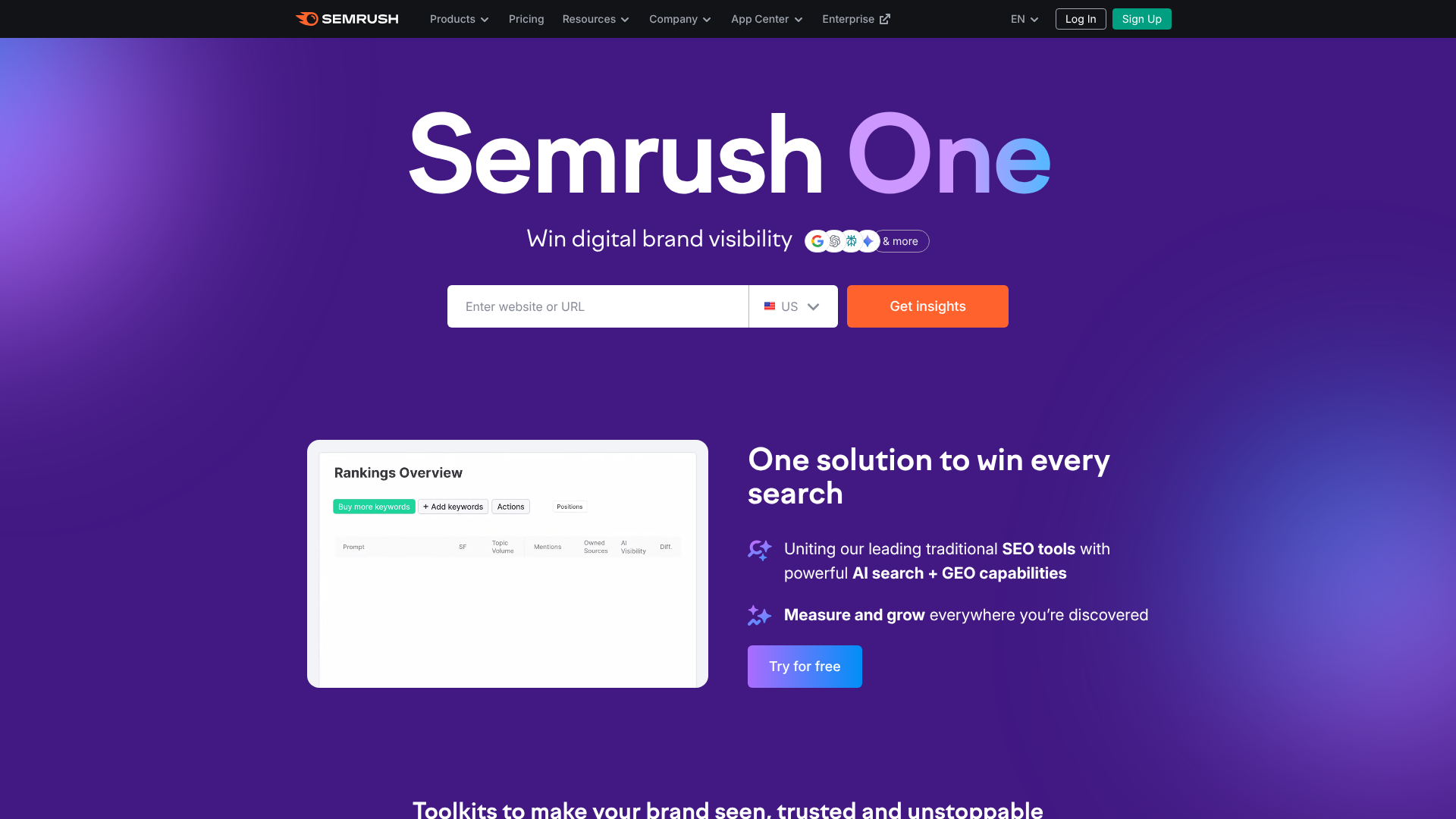
SEMrush is more than just an SEO tool; it's a complete digital marketing toolkit. Its biggest strength is the sheer breadth of its feature set. While it has powerful tools for core SEO tasks, it also provides comprehensive solutions for PPC, content marketing, social media management, and competitive intelligence. This makes it an incredibly valuable asset for teams that manage multiple marketing channels.
Its keyword research capabilities, particularly the Keyword Magic Tool, are extensive, offering a massive database of terms that can be filtered in countless ways. The competitor analysis tools are where SEMrush truly shines, providing deep insights into what keywords competitors are ranking for, where their backlinks come from, and what their ad copy looks like. The platform also includes unique tools like a Topic Research feature for content ideation and a Social Media Tracker.
Key Features of SEMrush
- SEO Toolkit: A full suite of tools for keyword research, backlink analysis, site auditing, and rank tracking.
- Advertising Toolkit: In-depth competitor analysis for PPC, including ad copy, keywords, and display advertising.
- Content Marketing Platform: Tools for topic research, SEO content template creation, and content performance tracking.
- Social Media Toolkit: Schedule posts, track performance, and analyse competitors' social strategies.
- Domain Overview: A quick snapshot of any domain's online visibility and traffic.
Pros
- Most Comprehensive Feature Set: An all-in-one solution that covers nearly every aspect of digital marketing.
- Excellent Competitor Analysis: Unparalleled insights into both organic and paid competitor strategies.
- Massive Keyword Database: One of the largest keyword databases on the market.
- Generous Usage Limits: The plans often offer more reports and queries per day compared to competitors.
Cons
- Can Be Overwhelming: The sheer number of tools and reports can be complex for new users to navigate.
- Interface Can Feel Cluttered: With so much data packed in, the user experience can sometimes feel less streamlined than Ahrefs.
- Backlink Data Lag: While very good, its backlink crawler is generally considered slightly less current than Ahrefs'.

SEO Tools Showdown: Ahrefs vs Moz vs SEMrush Feature by Feature

To truly understand the differences, we need to compare the core functionalities of each platform side-by-side. This is where the subtle but important distinctions in data and approach become clear.
| Feature | Ahrefs | Moz Pro | SEMrush |
|---|---|---|---|
| Primary Focus | Backlinks & Content SEO | On-Page SEO & Education | All-in-One Marketing |
| Backlink Index Size | Largest | Smallest | Large |
| Keyword Database | Very Large | Large | Largest |
| User Interface | Clean & Fast | Beginner-Friendly | Data-Dense |
| Competitor PPC Analysis | Basic | None | Excellent |
| Content Marketing Tools | Good (Content Explorer) | Basic | Excellent (Platform) |
| Free Trial | No (Paid Trial Only) | Yes (30 Days) | Yes (7 Days) |
| Best For | SEO Specialists | Beginners, SMBs | Agencies, Marketers |
Keyword Research: Who Finds the Best Opportunities?
All three tools have powerful keyword research features, but they excel in different areas. The ahrefs vs semrush comparison here is particularly tight. SEMrush's Keyword Magic Tool boasts a database of over 25 billion keywords and offers extensive filtering options. Ahrefs' Keywords Explorer, while having a slightly smaller database, provides unique metrics like 'Clicks' and SERP feature analysis, which are incredibly valuable for understanding user intent.
Moz's Keyword Explorer is the most straightforward of the three. Its 'Priority' score is a great feature for beginners, as it simplifies the decision-making process. However, for advanced users, it lacks the raw data depth and filtering capabilities of its competitors.
Winner: SEMrush for raw data size, Ahrefs for actionable metrics.
Backlink Analysis: The Data Accuracy Debate
This is Ahrefs' home turf. Its crawler is constantly scanning the web, providing the most up-to-date view of a website's backlink profile. It's particularly good at finding new links quickly. The reports are detailed, showing new and lost links, broken links, and anchor text distribution with precision.
SEMrush has a very capable backlink audit tool and a large index, but it's generally accepted that it lags slightly behind Ahrefs in freshness. The semrush vs moz comparison shows SEMrush with a clear data advantage. Moz's Link Explorer is reliable and powers its DA metric, but its index is the smallest and slowest to update of the three. For casual analysis, Moz is fine, but for serious link building, Ahrefs is the clear leader.
Winner: Ahrefs, decisively.
Site Auditing: Uncovering Technical SEO Flaws
All three platforms offer robust site audit tools that crawl your website and identify technical issues. SEMrush's Site Audit is comprehensive, checking for over 130 different issues and providing clear explanations and 'how-to-fix' guides. It integrates well with project management tools like Trello.
Ahrefs' Site Audit is known for its speed and clear data visualisations. It presents issues in well-organised reports that make it easy to prioritise fixes. Moz's Site Crawl is also effective, flagging critical issues and providing recommendations. While all three are excellent, SEMrush's depth and integration give it a slight edge.
Winner: SEMrush.
Pro Tip: When running a site audit, don't just fix the errors. Look for patterns. If you see many pages with thin content or slow load times, it points to a systemic issue in your content strategy or site architecture that needs to be addressed at a higher level.
Pricing Models: Which Tool Offers the Best Value?
Pricing is a major factor, and the three tools have different philosophies. It's crucial to check their official websites for the most current pricing, as plans and features change regularly.
Generally, Ahrefs and SEMrush are positioned as premium tools with similar price points. Their entry-level plans typically start around $99-$129 per month. The key difference often lies in the usage limits. SEMrush tends to be more generous with the number of reports you can run and projects you can create on its lower-tier plans.
Ahrefs' limits can feel more restrictive, pushing users towards higher-priced plans as their needs grow.
Moz Pro is often the most affordable of the three, with its entry-level plan starting at a similar price but offering a feature set that is more focused. This can represent great value for small businesses or individuals who don't need the vast capabilities of an all-in-one suite. The ahrefs vs moz cost difference can be significant at higher tiers.
All three offer discounts for annual payments, typically giving you two months free. SEMrush and Moz provide free trials, which is a major advantage for testing the software. Ahrefs' lack of a free trial can be a barrier for some potential users.
User Experience and Interface: Which Platform is Easiest to Use?
The user experience (UX) is where you'll feel the biggest day-to-day difference between the platforms.
Ahrefs is widely praised for its clean, modern, and incredibly fast interface. Data loads almost instantly, and the layout is intuitive. Despite the complexity of the data it presents, the platform never feels cluttered or overwhelming. It's designed for efficiency, allowing experienced SEOs to find what they need quickly.
Moz Pro is designed for clarity and ease of use. It uses a lot of guided workflows and provides helpful tips and explanations throughout the interface. This makes it the least intimidating platform for beginners. The trade-off is that it can feel a bit slower and less data-dense than the others.
SEMrush has the most challenging learning curve, simply due to the sheer volume of tools and data available. The interface is packed with information, which can be overwhelming for new users. However, once you learn your way around, its customisable dashboards and extensive reporting capabilities are extremely powerful.
Use Cases: The Right Tool for the Right Job
There is no single 'best' tool for everyone. The ideal choice depends entirely on who you are and what you need to achieve.
Best for SEO Agencies and Large Teams
For agencies managing multiple clients with diverse needs (SEO, PPC, social media), SEMrush is the clear winner. Its all-in-one nature streamlines workflows and reporting, providing a single source of truth for all marketing channels. The generous project limits and client management features are built for the agency model.
Best for Freelancers and Small Businesses
This depends on the budget and focus. If the budget is tight and the primary need is solid, fundamental SEO, Moz Pro is an excellent choice. Its ease of use and educational resources provide immense value. If a freelancer specialises in link building or advanced content strategy, Ahrefs' Lite plan might be a better, albeit more expensive, investment.
Best for Content Marketers and Link Builders
For professionals whose job revolves around creating high-performing content and acquiring authoritative backlinks, Ahrefs is unparalleled. The combination of its Content Explorer for ideation and its Site Explorer for backlink analysis provides a complete workflow for dominating organic search with content.
Best for Beginners Learning SEO
Moz Pro is the undisputed champion for those just starting their SEO journey. The platform is designed to teach as you go, and its connection to the Moz blog and Whiteboard Friday videos creates a supportive learning ecosystem. It helps build a strong foundation in SEO principles without the complexity of the other tools.
Frequently Asked Questions (FAQ)
Which is better, SEMrush or Ahrefs?
Neither is definitively 'better'; they are better for different things. Ahrefs is generally considered superior for backlink analysis due to its larger and faster-crawling index. SEMrush is better as an all-in-one marketing tool, offering a much wider range of features for PPC, social media, and content marketing that Ahrefs lacks. If your focus is purely on SEO, especially link building, Ahrefs has the edge. If you need a tool for your entire marketing team, SEMrush is the more versatile option.
Which is better, Moz or SEMrush?
For most professional use cases, SEMrush is the more powerful tool. It has a significantly larger data index for both keywords and backlinks, and its feature set is far more comprehensive. Moz's primary advantages are its user-friendliness and educational resources, making it a better choice for beginners or small businesses on a tighter budget who might find SEMrush overwhelming. For data depth and advanced features, SEMrush is the clear winner in the semrush vs moz comparison.
What is the most accurate SEO tool?
Accuracy in SEO tools is complex, as all of them use their own crawlers and algorithms to estimate metrics like search volume and traffic. No tool has access to Google's private data. However, for backlink data, Ahrefs is widely regarded as the most accurate and up-to-date. For keyword search volume, both Ahrefs and SEMrush use sophisticated models and are generally considered highly reliable, though discrepancies will always exist.
What is Ahrefs best for?
Ahrefs is best for any task related to backlink analysis and link building. This includes competitor backlink research, finding link building opportunities, and auditing your own link profile. It also excels at keyword research and content strategy, with tools that help you understand search intent and find topics that have a high potential to attract links and traffic.
Is Ahrefs good for keyword research?
Yes, Ahrefs is excellent for keyword research. Its Keywords Explorer tool is one of the best on the market. It provides standard metrics like search volume and keyword difficulty, but also offers unique and valuable data points like the number of clicks a keyword gets, the percentage of paid vs. organic clicks, and a detailed SERP overview. This allows for a much more nuanced approach to keyword selection.
Final Thoughts: Choosing Your SEO Champion
The battle of ahrefs vs moz vs semrush doesn't have a single winner because they aren't fighting for the exact same prize. Each platform has carved out a space where it truly excels. Your decision should be a reflection of your own priorities, expertise, and business goals.
To summarise:
- Choose Ahrefs if your primary focus is on link building, advanced content strategy, and you need the most accurate backlink data available.
- Choose SEMrush if you need a versatile, all-in-one marketing platform to manage SEO, PPC, social media, and content for multiple clients or your entire company.
- Choose Moz Pro if you are new to SEO, value a user-friendly experience, or need a solid, budget-friendly tool for a small business.
Take advantage of the free trials offered by SEMrush and Moz. Spend time in each platform, run reports on your own site, and see which workflow and data set feels right for you. Investing in the right SEO tool is an investment in your business's growth, so choose wisely.