

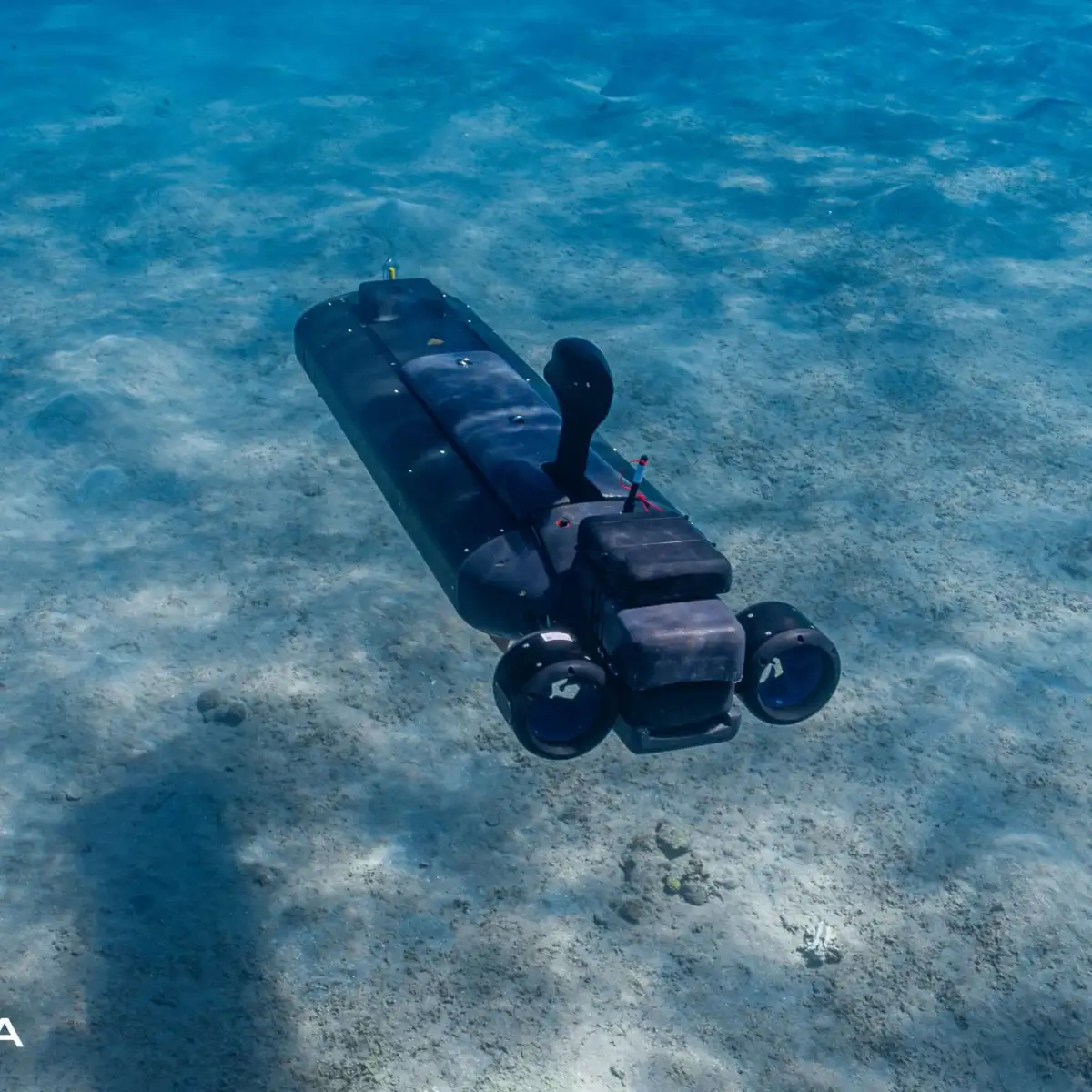

Underwater autonomous vessels and robots could play a growing role in defense and security operations, but communication has long been a major challenge. Submersibles typically need to surface to transmit data over long distances, a move that exposes them to detection.
Tel Aviv-based startup Skana Robotics says it has developed a solution. The company has added a new AI-powered communication capability to its fleet management platform, SeaSphere, allowing underwater vessels to communicate with one another across long distances without surfacing.
Unlike today’s popular large language models, Skana’s system relies on older, mathematically driven AI algorithms. These enable groups of autonomous vessels to share data underwater, respond to signals from other robots, and adjust their routes or tasks while still working toward a shared mission. Skana says the software can also be used to help secure underwater infrastructure and supply chains.
“Communication between vessels is one of the main challenges during the deployment of multi-domain, multi-vessel operations,” said Idan Levy, co-founder and CEO of Skana Robotics. He explained that the company’s goal is to enable hundreds of unmanned vessels to operate together, share data, and coordinate both on the surface and underwater.
The research behind the new capability was led by Teddy Lazebnik, an AI scientist and professor at the University of Haifa. Lazebnik said the team deliberately avoided newer AI models, which can be powerful but unpredictable.
“The newer algorithms are more powerful, but less predictable,” Lazebnik said. “With older approaches, you gain explainability, predictability, and generality, even if you sacrifice some performance.”
Read: Robotics Pioneer Warns of Humanoid Hype
Founded in 2024, Skana Robotics emerged from stealth earlier this year and is currently focused on selling to governments and companies in Europe, where maritime security concerns have risen amid the war between Russia and Ukraine.
Levy said the company is in talks for a significant government contract it hopes to close by the end of the year. In 2026, Skana plans to release a commercial version of its software and demonstrate its technology at scale in real-world operations.
“We want to show that we can manage complex operations at scale,” Lazebnik said. “We want decision-makers to see the results for themselves.”