

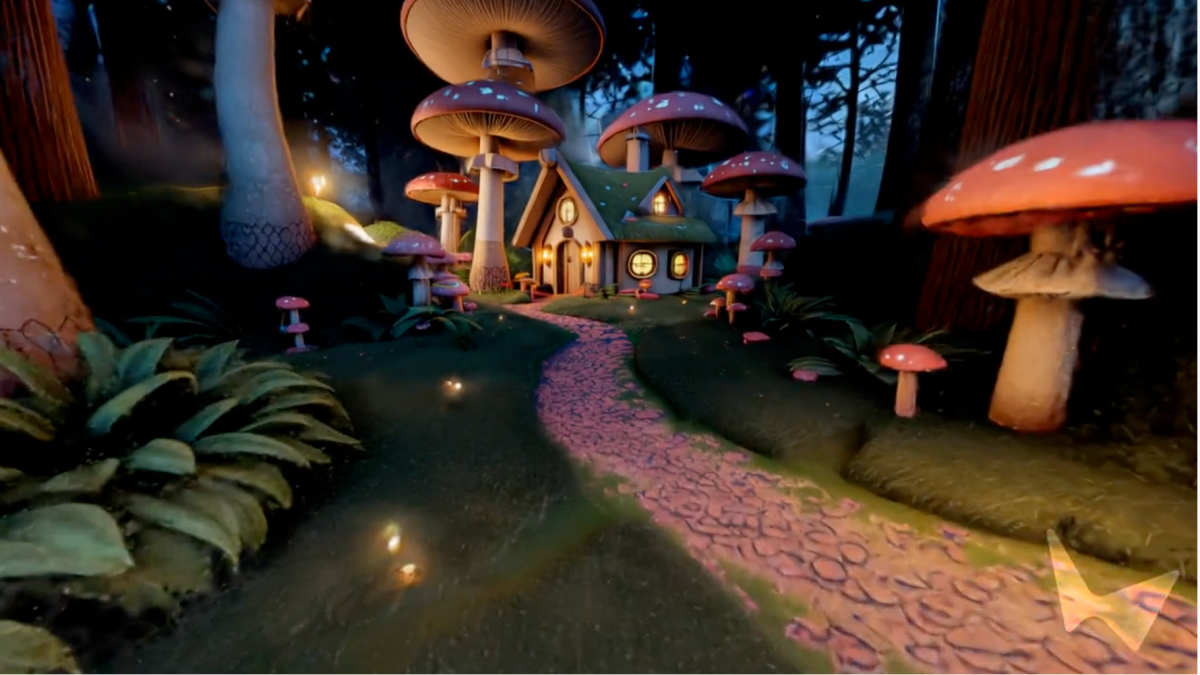

World Labs, the startup founded by AI pioneer Fei-Fei Li, has launched its first commercial world model product, Marble. The generative AI platform enables users to transform text prompts, photos, videos, 3D layouts, or panoramas into editable, downloadable 3D environments.
The product, available via freemium and paid tiers, marks the company’s first major step since emerging from stealth last year with $230 million in funding. Marble was first released in limited beta two months ago and is now positioned to lead the fast-growing field of world models, a category of AI systems that simulate and predict real-world environments.
Competing startups like Decart and Odyssey have released free demos, while Google’s Genie remains in limited preview. However, Marble stands out by generating persistent, downloadable 3D worlds rather than dynamic ones that morph as users explore them. Users can export these worlds as Gaussian splats, meshes, or videos, offering creative flexibility and stability.
Unlike traditional generators, Marble also includes AI-native editing tools and a hybrid 3D editor called Chisel, which allows users to design spatial layouts before AI fills in visual details. “This is a brand new category of model that’s generating 3D worlds, and this is something that’s going to get better over time,” said Justin Johnson, co-founder of World Labs.
Early versions of Marble could generate interactive 3D scenes from a single image, but with limited movement and rendering issues. Today’s release significantly improves realism, consistency, and control. Users can upload multiple images or clips to build realistic digital twins of real spaces, edit structural elements, and even expand environments with scene expansion features.
Marble’s subscription plans range from a Free tier (four generations) to Max ($95/month), offering up to 75 generations and full access to features like scene expansion and commercial rights.
Read Also: GoFundMe Launches Digital Gift Cards for Charitable Giving
The tool’s potential applications span gaming, visual effects (VFX), and virtual reality (VR). Developers can use Marble to generate immersive backgrounds or ambient spaces for engines like Unity and Unreal Engine, while VFX artists gain full camera control with 3D assets instead of AI video inconsistencies. Marble also supports Apple Vision Pro and Meta Quest 3, allowing immediate VR exploration of generated worlds.
Beyond entertainment, Marble could impact robotics and simulation training, helping AI systems learn from realistic digital environments.
In a recent manifesto, Fei-Fei Li described Marble as “the first step toward creating a truly spatially intelligent world model.” She believes that just as large language models taught machines to read and write, world models like Marble will teach them to see and build, a leap that could transform science, medicine, and the broader AI landscape.
“Our dreams of truly intelligent machines will not be complete without spatial intelligence,” Li wrote.